Drafts around doors and windows can make a room uncomfortable and cause heating or cooling to work harder. The good news is that many leaks come from simple gaps in weather stripping, worn caulk, or doors that no longer close evenly.
The goal is not to seal every opening in a building without thought. Homes need appropriate ventilation, and some windows or doors have drainage and operating clearances that should remain open. Focus on obvious unintended gaps and use products designed for the location.
Check the door seal in daylight
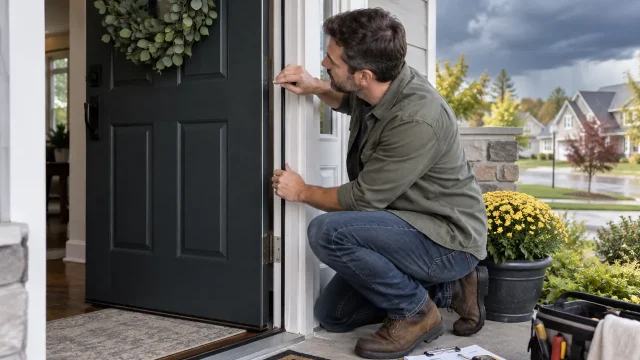
Close the exterior door and look around the edges for visible light. Run your hand near the perimeter on a windy day without placing fingers in pinch points. A gap that changes from top to bottom may indicate worn weather stripping or alignment that needs adjustment.
Inspect the door sweep
The sweep or bottom seal should reduce the gap at the threshold without making the door difficult to operate. Replace torn or hardened material with a compatible style and make sure the threshold remains safe and unobstructed.
Look for compressed weather stripping
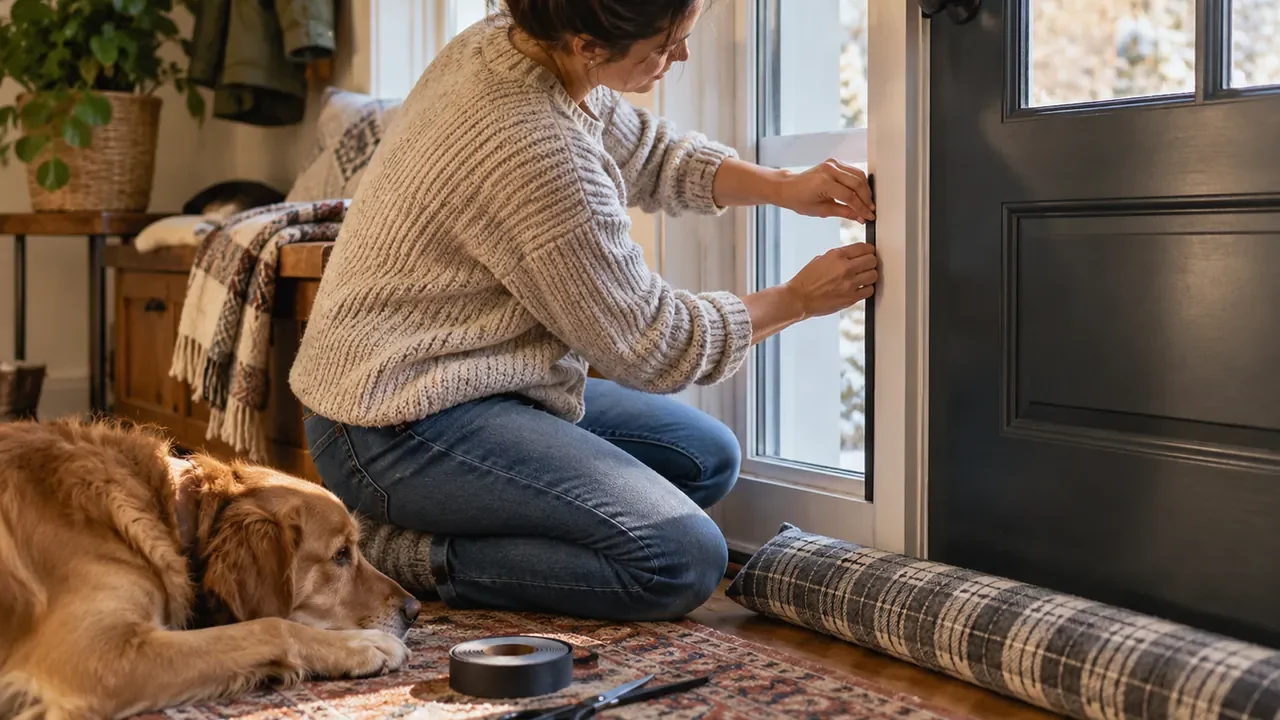
Foam, rubber, and other seals can flatten, split, or pull away over time. Clean the mounting surface before installing replacement material and choose a thickness that seals when the door or window is closed without preventing the latch from engaging.
Inspect exterior caulk
Caulk around frames can crack or separate as materials move. Remove loose material where appropriate, clean and dry the joint, and use an exterior-rated product suited to the surfaces. Do not cover weep holes or designed drainage paths.
Check window locks and latches
A window that is not fully closed or locked may not compress its weather seal properly. Clean tracks, remove obvious debris, and confirm that the sash closes evenly before adding new products.
Use temporary solutions carefully
Removable window film and temporary rope caulk can be useful for seasonal leaks, especially on windows that will not be opened for months. Follow the product directions and consider the effect on painted finishes, emergency egress, and ventilation.
Do not overlook outlets on exterior walls
Some people feel air movement around outlet or switch covers on exterior walls. Because electrical work carries additional risk, avoid inserting improvised materials into boxes. If the leak is significant, ask a qualified professional about appropriate air-sealing methods.
Address repeated movement or damage
A door that suddenly rubs, a window that will not close, or a frame with new cracks can have causes beyond a worn seal. If the opening is visibly distorted or the surrounding wall shows movement or moisture damage, have the underlying issue evaluated rather than simply adding thicker weather stripping.
Quick checklist
- Check exterior doors for visible light around the perimeter.
- Replace torn or permanently compressed weather stripping.
- Keep designed drainage holes and ventilation paths open.
- Use exterior-rated caulk where the original joint has failed.
- Investigate sudden alignment changes instead of masking them.
Common questions
How can I tell if a draft is from the window or the wall?
Check the moving parts, frame perimeter, trim edges, and nearby outlets separately. A controlled inspection on a windy day can help narrow the location, but hidden air leakage may require a professional energy assessment.
Should I caulk every gap around a window?
No. Some gaps are intentional drainage or movement details. Follow the window manufacturer guidance and avoid sealing weep holes or other designed openings.
When a small maintenance issue needs professional help
Routine observation is useful, but it should not turn into risky diagnosis. Stop and use an appropriate qualified professional when a problem involves electrical components, gas, structural movement, active hidden water damage, unsafe heights, or a repair you cannot isolate confidently. Repeated failure after a simple fix is another sign that the visible symptom may not be the real cause.
Keep notes or photos of what changed and when you noticed it. Clear information about location, timing, sounds, moisture, or operating conditions can make a service visit more efficient and helps you compare whether the problem is getting better or worse.
Bottom line
Reducing drafts is mostly about restoring the seals that doors and windows were designed to have. Start with fit, latches, sweeps, weather stripping, and failed caulk before adding complicated products. If a frame has shifted, shows water damage, or refuses to close correctly, solve that underlying problem first.