There is no single filter-change interval that works for every home. Filter size, filter type, system runtime, pets, renovation dust, outdoor conditions, and the number of people in the home can all affect how quickly a filter loads with debris.
A better habit is to check the filter on a regular schedule and replace or clean it according to its condition and the equipment instructions. This keeps you from discarding a clean filter too early or leaving a heavily loaded one in place too long.
Start with the equipment and filter instructions
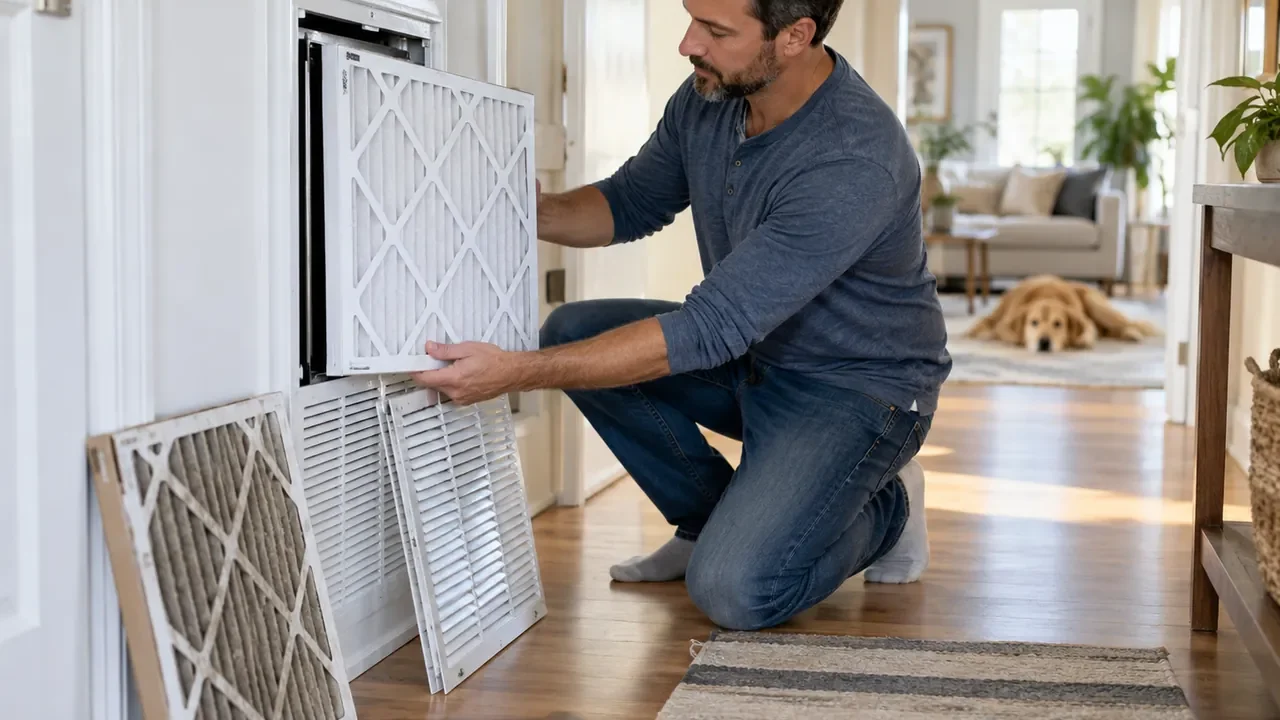
Check the HVAC manual, filter label, or guidance from the system manufacturer or service company. The system may be designed for a particular filter size and range of resistance. Using a filter that does not fit correctly can allow air to bypass the media.
Inspect monthly when you are learning your home
A monthly visual check is a useful starting point, especially through a full heating and cooling season. Note how dirty the filter looks each time. After a few checks, you will have a better idea of the normal replacement interval for your household.
Pets can shorten the interval
Homes with shedding pets often collect more hair and dander at returns and filters. Vacuum accessible return grilles and inspect the filter more frequently, particularly during heavy shedding periods.
Renovation dust changes everything
Sanding, drywall work, sawing, and other projects can produce far more airborne dust than ordinary living. Protect the HVAC system as recommended for the project and inspect the filter frequently during and after dusty work.
Long system runtime can load filters faster
During very hot or cold weather, the blower may run more hours each day. More air moving through the filter can mean faster accumulation, so a schedule that worked in mild weather may need adjustment during peak seasons.
Look beyond color alone
A filter can become visibly gray without being completely blocked, and some fine-particle filters may not look dramatic even as they collect debris. Compare the used filter with a new one, check for an even fit, and pay attention to manufacturer guidance rather than relying only on appearance.
Do not ignore airflow changes
Weak airflow can have many causes, so a dirty filter is only one possibility. If replacing an obviously loaded filter does not restore normal operation, or if the system is noisy, icing, cycling abnormally, or failing to heat or cool correctly, arrange appropriate service.
Write the size and last-change date nearby
Keep the exact filter dimensions in your phone or on a label near the unit, and note when a new filter was installed. This prevents guesswork at the store and makes it easier to recognize whether the current filter is loading unusually quickly.
Quick checklist
- Confirm the correct filter size and type for the system.
- Inspect the filter monthly until you understand your home’s normal pattern.
- Check more often during renovations, heavy pet shedding, or long HVAC run times.
- Replace or clean according to the filter and equipment instructions.
- Call an HVAC professional if airflow or system performance remains abnormal.
Common questions
Is a higher filter rating always better?
Not automatically. A filter must be appropriate for the equipment. Very restrictive media can affect airflow in systems not designed for it. Follow the system manufacturer or a qualified HVAC professional’s recommendation.
Can I vacuum a disposable HVAC filter and reuse it?
Most disposable filters are designed to be replaced, not vacuumed and reused. Washable filters should be maintained only according to their specific instructions and must be fully dry before reinstalling if the manufacturer requires washing.
When a small maintenance issue needs professional help
Routine observation is useful, but it should not turn into risky diagnosis. Stop and use an appropriate qualified professional when a problem involves electrical components, gas, structural movement, active hidden water damage, unsafe heights, or a repair you cannot isolate confidently. Repeated failure after a simple fix is another sign that the visible symptom may not be the real cause.
Keep notes or photos of what changed and when you noticed it. Clear information about location, timing, sounds, moisture, or operating conditions can make a service visit more efficient and helps you compare whether the problem is getting better or worse.
Bottom line
The safest answer to “how often should I change the HVAC filter?” is to combine a regular inspection habit with the instructions for your specific system. Check monthly at first, learn what normal loading looks like in your home, and adjust for pets, projects, and heavy seasonal use. A simple note of the filter size and change date makes the routine much easier to maintain.