Exterior doors are part of the weather barrier, security system, and everyday traffic path of a home. Before a season of heavy rain, cold, heat, or wind, a short inspection can reveal worn seals, loose hardware, and water paths that are easier to fix early.
Keep the work simple and avoid altering fire-rated doors, security hardware, or structural openings without appropriate guidance.
Open and close the door slowly
Notice rubbing, sticking, sagging, or a latch that no longer lines up. Small seasonal movement can occur, but sudden or severe changes can point to hardware, moisture, or frame issues that deserve closer inspection.
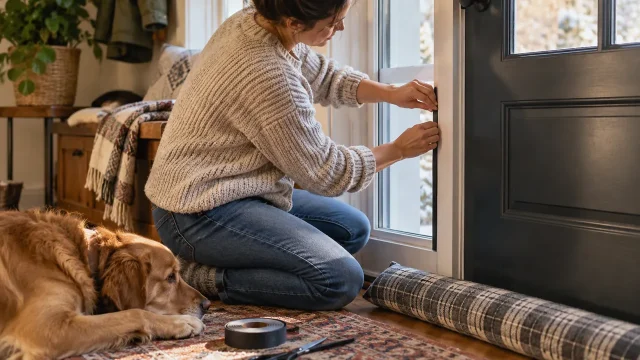
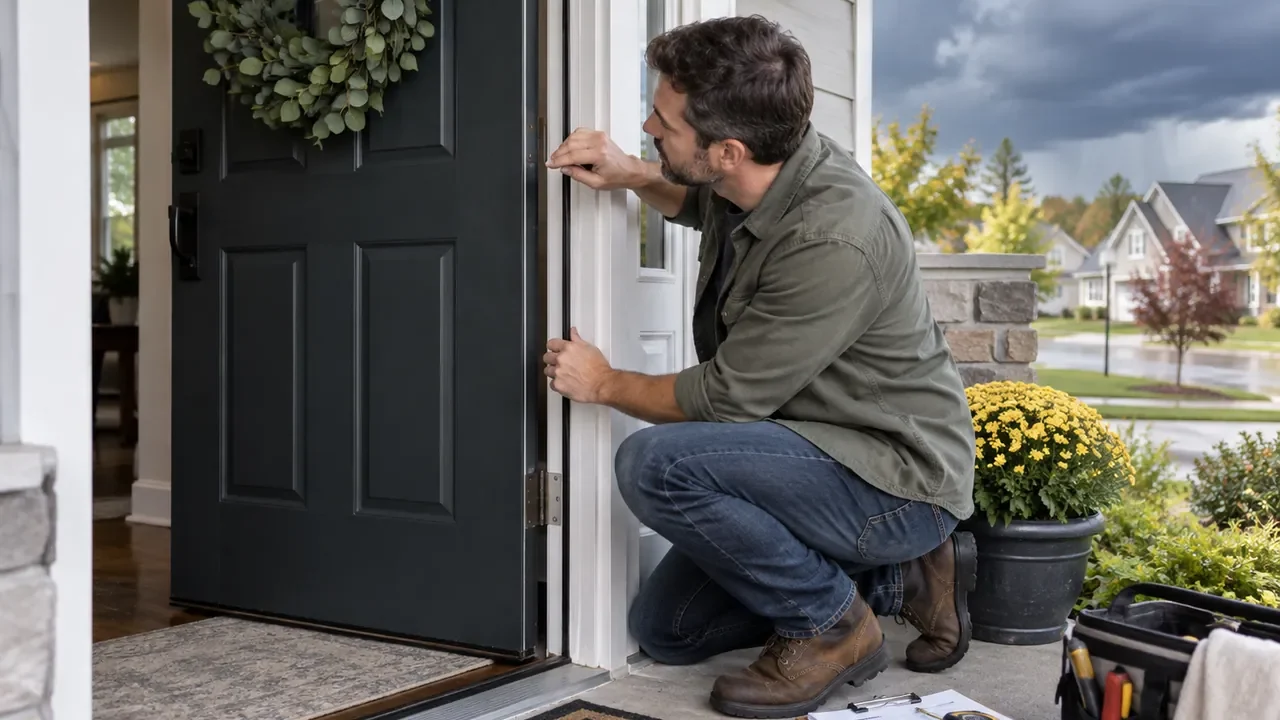
Inspect the weather stripping
Look for tears, permanent flattening, missing sections, or seals that no longer touch the door evenly. Replace with a compatible profile and thickness so the door still closes and latches correctly.
Check the bottom sweep and threshold
Look for daylight, worn seals, loose screws, or debris that prevents the door from closing fully. Keep the threshold safe and free from trip hazards.
Look for water staining
Stains or swelling at lower corners, trim, or adjacent flooring can indicate wind-driven rain, failed seals, or drainage problems. Dry the area and investigate recurring moisture rather than painting over it.
Tighten simple hardware carefully
Loose handle, hinge, or strike screws may be suitable for basic maintenance if the hardware is otherwise sound. Do not over-tighten into damaged material, and use appropriate repair when screw holes no longer hold.
Keep drainage paths clear
Some thresholds, frames, and nearby exterior surfaces are designed to drain water. Remove leaves and debris without sealing openings that appear intentional.
Check exterior lighting and approach
Make sure the path to the door is clear, lighting is functioning, and mats lie flat. In storm or winter conditions, safe access matters as much as the door seal itself.
Confirm emergency and security function
Locks should operate smoothly and the door should open as intended from inside. Do not add weather-sealing products that interfere with latching, egress, or accessibility.
Quick checklist
- Check operation, latch alignment, and visible gaps.
- Inspect weather stripping and the bottom sweep.
- Look for recurring moisture or swelling.
- Keep thresholds and drainage paths clear.
- Make sure added seals do not interfere with egress or locking.
Common questions
Why does an exterior door stick only in some seasons?
Wood movement, humidity, temperature changes, foundation movement, and hardware wear can all affect fit. Minor seasonal changes may be normal, but significant or worsening alignment problems should be investigated.
Can thicker weather stripping fix every draft?
No. Material that is too thick can prevent the door from latching or distort the fit. Use the correct profile and address alignment or frame problems when they are the real cause.
When a small maintenance issue needs professional help
Routine observation is useful, but it should not turn into risky diagnosis. Stop and use an appropriate qualified professional when a problem involves electrical components, gas, structural movement, active hidden water damage, unsafe heights, or a repair you cannot isolate confidently. Repeated failure after a simple fix is another sign that the visible symptom may not be the real cause.
Keep notes or photos of what changed and when you noticed it. Clear information about location, timing, sounds, moisture, or operating conditions can make a service visit more efficient and helps you compare whether the problem is getting better or worse.
Bottom line
Exterior door maintenance is mostly a fit-and-seal check. Make sure the door operates normally, seals contact evenly, water can drain, and hardware is secure. Fixing small issues before extreme weather is easier than discovering them during a storm or cold snap.