Plumbing leaks are not always dramatic. Many begin as slow drips, loose fittings, worn seals, or intermittent moisture that appears only when a fixture or appliance runs. Catching those clues early can reduce damage to cabinets, flooring, drywall, and stored items.
You do not need to open walls or dismantle plumbing to perform a useful first check. Observation is often enough to decide whether the area needs a professional inspection.
1. A stain that slowly grows
Yellowing, brown marks, bubbling paint, or a darkened patch on a ceiling or wall can indicate repeated moisture. Mark the edge lightly with a pencil and monitor whether it expands, but do not ignore an active wet area or sagging material.
2. A musty smell that returns
A persistent damp or musty odor near a cabinet, wall, or floor can be a clue even when the surface looks dry. Check nearby plumbing fixtures and look for condensation, damp stored items, or hidden drips around accessible connections.
3. Swollen cabinet panels or flooring
Particleboard cabinets and some flooring materials can swell, warp, or separate after repeated exposure to water. Look under sinks and around dishwashers, refrigerators with water lines, toilets, and washing machines.
4. Water under a sink after normal use
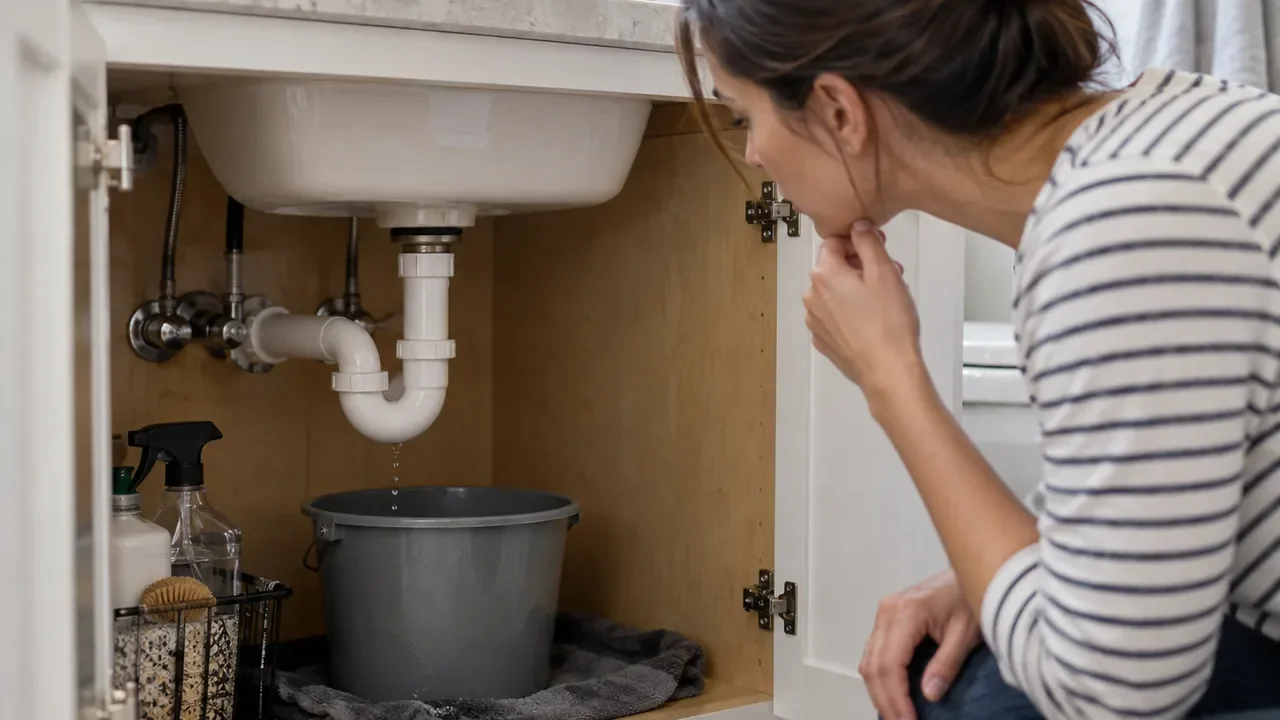
A few drops may come from splashing, so dry the area completely and observe it during a normal faucet and drain cycle. If moisture returns around supply valves, trap connections, or the cabinet floor, the source deserves attention.
5. A toilet that keeps refilling
A toilet that intermittently runs or refills can waste water even without a visible floor leak. Internal tank components may need adjustment or replacement. If water is appearing around the base, stop treating it as a simple running-toilet problem and investigate promptly.
6. An unexplained change in water use
If household habits have not changed but the water bill or meter use rises noticeably, a leak may be one possible explanation. Compare similar billing periods and look for obvious fixture problems before assuming a hidden leak.
7. Dampness near appliances
Dishwashers, washing machines, water heaters, refrigerators with ice makers, and other plumbed appliances can leak from hoses, valves, drains, or the appliance itself. Inspect accessible edges and the floor around them rather than waiting for a large puddle.
8. The sound of water when nothing is running
A faint hiss or trickle can have harmless explanations, but persistent water sounds when fixtures and appliances are off are worth checking. Confirm that no toilet is refilling and no irrigation system is operating before arranging further inspection.
Quick checklist
- Know where the main water shutoff is located and keep access clear.
- Dry suspicious areas before testing so you can see whether moisture returns.
- Check under sinks and around appliances during a monthly walk-through.
- Do not open walls or work on pressurized plumbing if you are unsure of the system.
- Call a qualified plumber for active leaks, hidden moisture, repeated damage, or uncertain sources.
Common questions
Can a small leak dry up and still be a problem?
Yes. Some leaks occur only when a fixture drains, an appliance runs, or pressure changes. A dry surface later does not prove the source has been resolved if staining, swelling, or odor keeps returning.
When is a leak an emergency?
Rapid water flow, water near electrical equipment, a bulging ceiling, significant flooding, or inability to stop the source can require urgent action. If it is safe to do so, shut off the relevant water supply and contact an appropriate professional.
When a small maintenance issue needs professional help
Routine observation is useful, but it should not turn into risky diagnosis. Stop and use an appropriate qualified professional when a problem involves electrical components, gas, structural movement, active hidden water damage, unsafe heights, or a repair you cannot isolate confidently. Repeated failure after a simple fix is another sign that the visible symptom may not be the real cause.
Keep notes or photos of what changed and when you noticed it. Clear information about location, timing, sounds, moisture, or operating conditions can make a service visit more efficient and helps you compare whether the problem is getting better or worse.
Bottom line
Small plumbing leaks are easiest to manage when you pay attention to changes rather than waiting for a flood. Repeated stains, cabinet swelling, unusual odors, and moisture that returns after drying are all reasons to investigate. Keep your first checks visual and safe, and bring in a qualified plumber when the source is hidden, active, or beyond a simple fixture-level fix.