A monthly home maintenance routine does not need to take an entire weekend. The most useful checks are usually small, repeatable tasks that help you notice a problem before it becomes expensive, inconvenient, or damaging. A good checklist also reduces the mental load of trying to remember what needs attention around the house.
1. Walk through the house and look for water where it should not be
Start with a slow walk through the kitchen, bathrooms, laundry area, basement, and any room that shares a wall with plumbing. Look under sinks, around toilets, near the water heater, behind the washing machine, and around visible supply lines. You are not trying to diagnose every plumbing issue. You are simply checking for dampness, staining, drips, swelling, or an unfamiliar musty smell.
If you find active leaking, protect the area from further damage and arrange an appropriate repair. A small amount of moisture can be easy to ignore, but repeated exposure may damage cabinets, flooring, drywall, and stored items.
2. Check the HVAC filter
Look at the filter rather than replacing it automatically on a fixed date. Homes differ because of pets, dust, renovation work, filter type, and how often the system runs. If the filter is visibly loaded with dust, replace or clean it according to the equipment and filter instructions.
While you are there, make sure return-air grilles are not blocked by furniture, boxes, or heavy curtains. Good airflow helps the system operate as intended and can make rooms feel more comfortable.
3. Test smoke and carbon monoxide alarms
Use the test button on alarms according to the manufacturer’s instructions and pay attention to low-battery warnings. If an alarm is damaged, missing, or beyond its recommended service life, replace it with an appropriate unit. Do not paint over alarms or cover them to silence nuisance alerts.
4. Clean the kitchen sink area and inspect the drain
Remove debris from the sink strainer, wipe around the faucet base, and watch how quickly water drains. A drain that becomes slower month after month is easier to address early than after it stops moving water altogether. Avoid pouring grease, oils, coffee grounds, or fibrous food waste into the drain simply because the disposal appears to handle them.
5. Give the dishwasher a quick maintenance check
Inspect the filter area, spray-arm holes, door gasket, and the space under the lower rack. Remove food scraps and wipe residue from the gasket. If the dishwasher has a removable filter, clean it using the appliance manual rather than forcing parts that are not designed to come apart.
6. Look behind and underneath major appliances
You do not need to move every appliance each month. Instead, inspect the visible floor edges around the refrigerator, dishwasher, washer, and dryer. New water marks, unusual vibration, excessive heat, or a new sound are reasons to look closer. If an appliance must be pulled out, protect the floor and make sure hoses and cords are not stretched or crushed.
7. Clear lint and dust from the laundry area
Empty the dryer’s lint screen after use and inspect the surrounding area for escaped lint. Each month, vacuum accessible dust around the machines and check that the dryer vent connection looks secure and is not sharply crushed. If drying time has noticeably increased, the exhaust path may need attention.
8. Check bathroom moisture and ventilation
Look at ceiling corners, grout lines, caulk, window edges, and the area around the exhaust fan. Persistent condensation is a sign that moisture is staying in the room too long. Run the exhaust fan during showers and for a period afterward, open the door when practical, and keep the fan grille free of dust.
9. Inspect doors and windows for simple problems
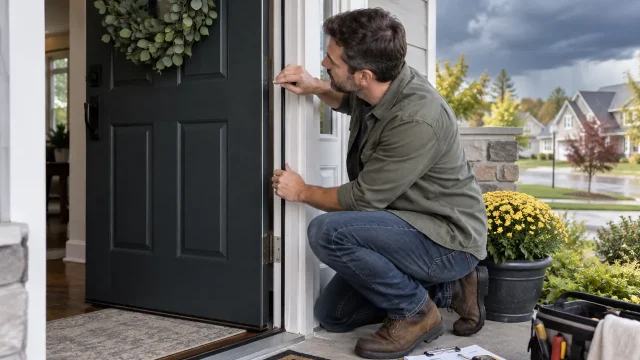
Open and close frequently used windows and exterior doors. Notice sticking, loose handles, torn screens, damaged weather stripping, or gaps where you can feel outside air. Small adjustments and replacement weather stripping are usually easier to plan before extreme weather arrives.
10. Take a quick look outside
Walk around the exterior and look up as well as down. Check for fallen branches, clogged visible drains, damaged siding, loose trim, standing water, or gutters that appear to be overflowing after rain. You do not need to climb a ladder for this monthly check. Use the ground-level walk-through to identify anything that deserves a safer, closer inspection later.
11. Check the supplies that prevent small problems from becoming big ones
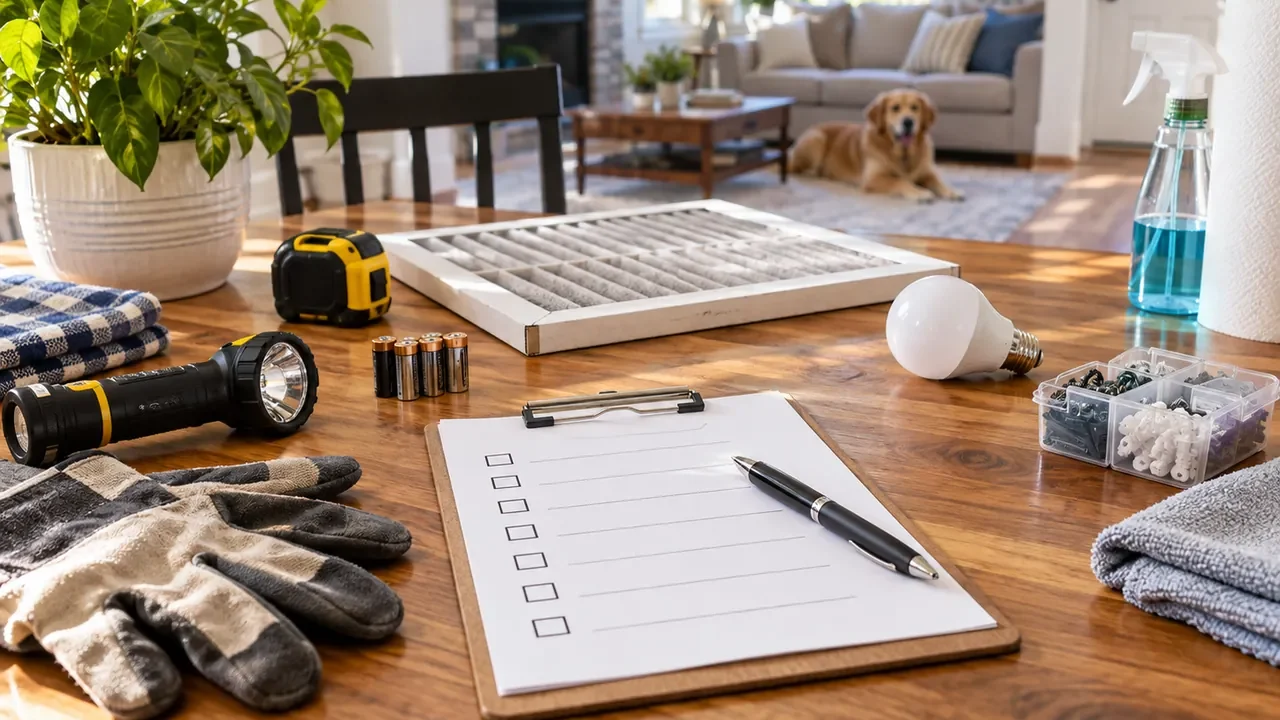
Make sure you know where the main water shutoff is and that access to it is not blocked by storage. Check that flashlights work, basic batteries are available, and the fire extinguisher is accessible and within its service requirements. These are easy things to forget until the moment they are needed.
12. Keep a short home maintenance note
End the routine by writing down anything that changed: a slow drain, a noisy fan, a cracked seal, a stain that was not there last month. A simple note on your phone is enough. The value is in seeing patterns. If the same issue appears repeatedly, you know it is not just a one-time annoyance.
A monthly routine should stay simple
The goal is not to turn your home into a constant project. Most months, this checklist should be a quick inspection with only one or two small tasks. Save larger work for seasonal maintenance days and bring in qualified help when a job involves electrical service, gas, structural damage, significant water intrusion, or anything you cannot inspect safely.
Consistency matters more than perfection. A short monthly walk-through makes it easier to understand how your home normally looks, sounds, and feels. That familiarity is what helps you notice small changes early.