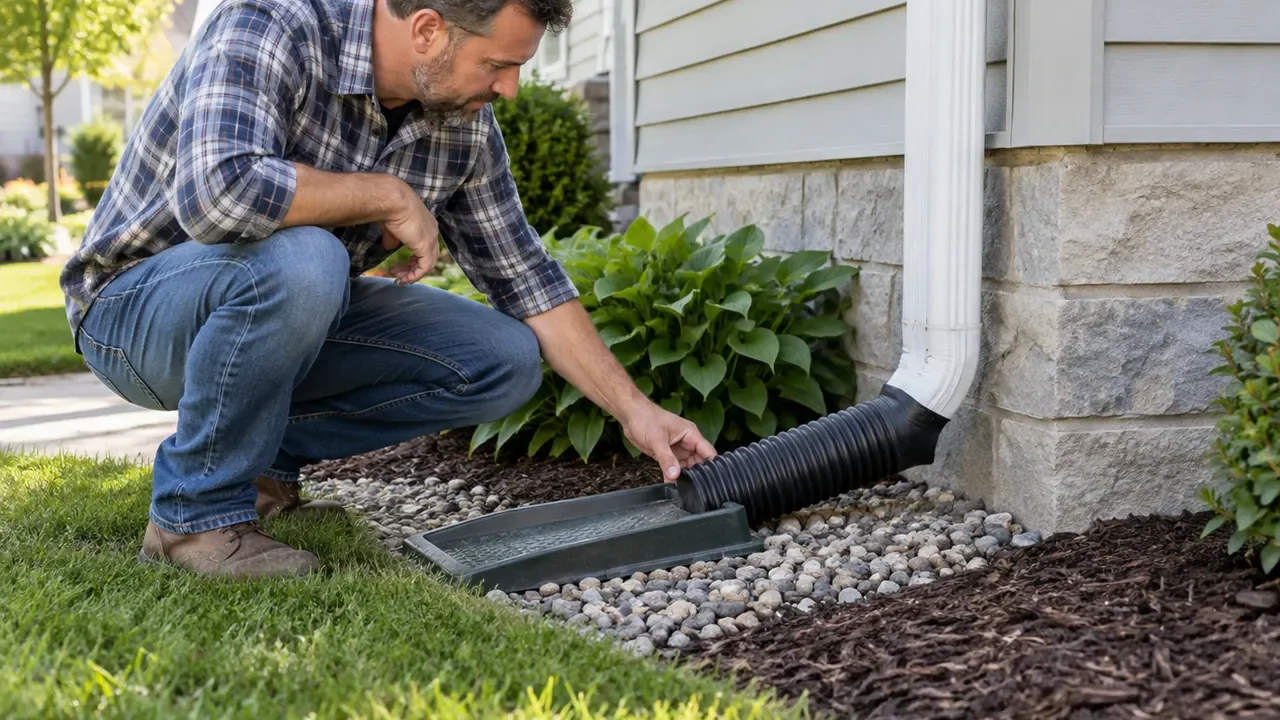
You can learn a surprising amount about roof drainage without climbing a ladder. Watching the house during or just after rain can reveal overflowing gutters, disconnected downspouts, erosion, and water collecting where it should not.
This guide stays at ground level. Roof edges, ladders, steep slopes, and high gutters can create serious fall risks. If cleaning or repair requires elevated access, use a qualified professional or an appropriate safe method.
Watch the gutters during rain from a safe location
Look for water spilling over the front or back edge, leaking at joints, or missing the gutter entirely. Repeated overflow can indicate blockage, poor slope, or a capacity issue that deserves closer inspection.
Check where downspouts discharge
Water should be directed to an appropriate location for the property and local drainage system. Look for crushed extensions, disconnected elbows, or discharge that immediately runs back toward the foundation.
Look for soil erosion below roof edges
Channels in soil, displaced mulch, or splash marks can indicate water is falling where the gutter system is not controlling it. Note the location so it can be inspected safely later.
Check for standing water near the house
After rain, walk the perimeter and identify puddles that remain close to the foundation. Occasional surface water can have many causes, but repeated ponding is a reason to review grading, downspout discharge, and local drainage.
Inspect visible drain openings
Keep accessible yard drains, channel drains, and surface grates free from leaves and debris. Do not reach into deep or hazardous openings, and avoid sending debris into a system you cannot inspect.
Look for staining or splash-back
Mud marks on siding, foundation surfaces, or porch areas can show where water repeatedly hits the building. The pattern can help identify a short downspout, overflowing gutter, or poorly directed runoff.
Notice basement or crawl-space changes after storms
A new damp smell, water mark, or visible moisture after rain may be connected to exterior drainage, though other causes are possible. Repeated moisture inside the structure should be evaluated rather than managed only with surface cleanup.
Check drainage after landscaping changes
New beds, edging, patios, soil, or storage items can unintentionally redirect water. Make sure recent changes have not blocked a designed path or created a low spot against the home.
Quick checklist
- Observe gutter behavior during rain from the ground.
- Check downspout connections and discharge locations.
- Keep accessible surface drains clear.
- Look for ponding, erosion, and splash marks near the structure.
- Use professional help for elevated gutter cleaning or repairs.
- Investigate repeated indoor moisture after rain.
Common questions
How far should a downspout discharge from the house?
There is no single distance that fits every property. The correct setup depends on grading, soil, foundation design, local rules, and the drainage system. The key is that water should not simply flow back toward the structure.
Can I tell if gutters are clogged without climbing?
Often you can see symptoms such as overflow during rain, little or no flow from a downspout, plant growth at the gutter edge, or staining. Confirming and clearing the blockage may still require safe elevated access.
Work with the site and the weather
Outdoor maintenance should adapt to local climate, drainage, plant needs, and weather conditions. Avoid working at unsafe heights or during heat, storms, strong wind, or slippery conditions. Before digging, edging, or driving stakes, account for irrigation, lighting, and any buried services that may be present.
Use local horticultural and municipal guidance when water restrictions, invasive plants, runoff rules, or seasonal weather create special requirements. A low-maintenance outdoor space is easier to manage when the plan fits the site instead of fighting it.
Bottom line
Ground-level drainage checks are valuable because they show how water actually behaves around the property. Watch during rain, follow the downspouts, and look for standing water or erosion. Those observations give you useful information without taking unnecessary ladder risks.