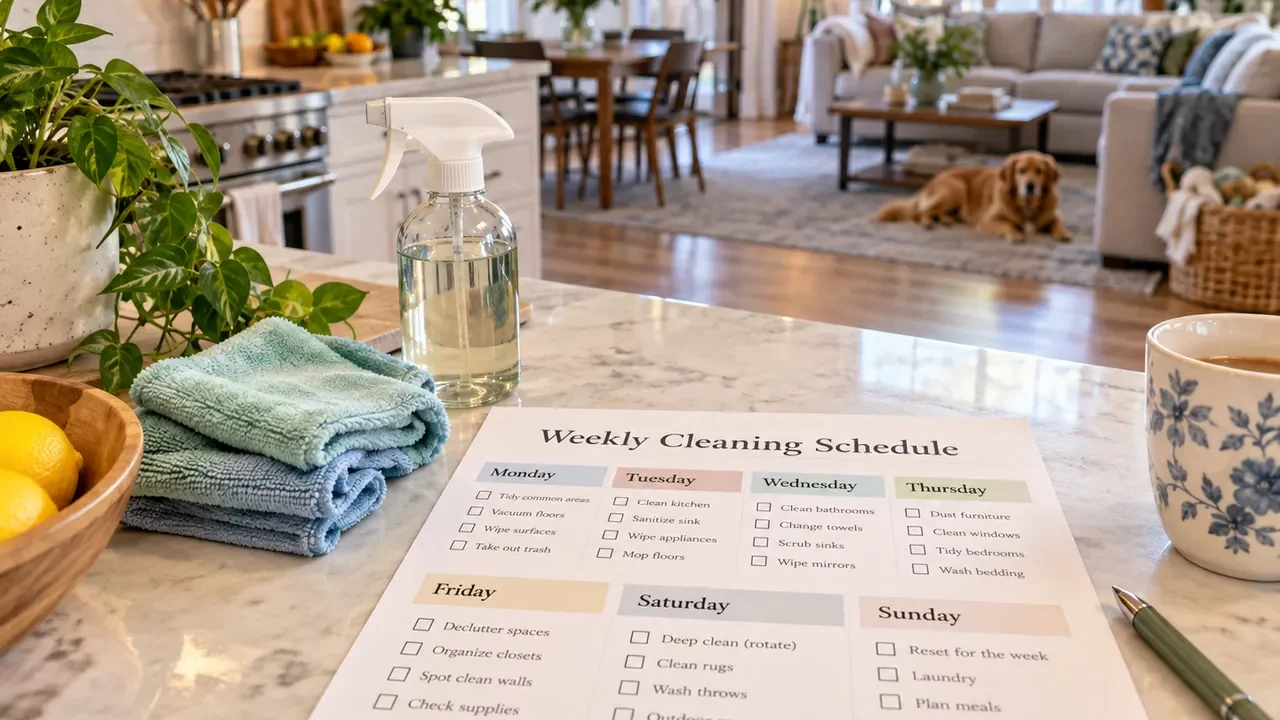
Cleaning is easier to maintain when it is treated as a rhythm instead of an emergency. A weekly plan does not need to make every room perfect. Its job is to keep the most-used areas from reaching the point where they require a major recovery day.
The best schedule is the one you can repeat. Adjust the days to fit work, school, pets, and the size of your home, and keep each session focused enough that you can finish it without losing the rest of your evening.
Start with a 10-minute daily reset
Put away items that have drifted out of place, clear the main kitchen counter, collect obvious trash, and return shoes or bags to their usual spot. This short reset prevents small clutter from becoming the first obstacle every time you try to clean.
Keep the reset narrow. Do not open drawers, start a closet project, or reorganize a cabinet unless that is the task for the day. The goal is to restore working surfaces and clear walking areas.
Monday: bathrooms
Wipe sinks and faucets, clean the toilet, check the shower or tub for soap residue, replace used towels, and empty the bin. If mirrors need attention, finish them after the wetter cleaning is done so splashes do not undo the work.
Use products that are compatible with the surfaces in your bathroom. Stone, specialty finishes, and some fixtures can be damaged by harsh acids or abrasives, so follow the product and manufacturer directions.
Tuesday: dust and touch points
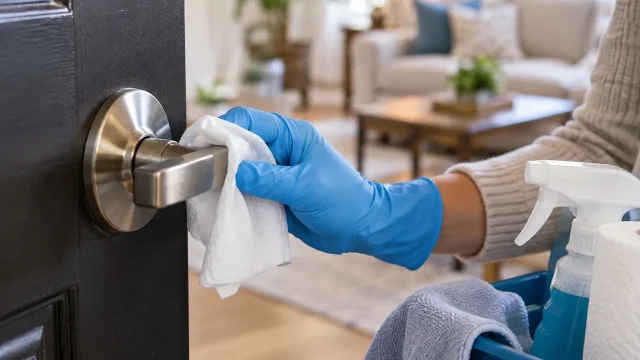
Work from higher surfaces downward. Dust shelves, window sills, lamp bases, furniture tops, and electronics with an appropriate cloth, then wipe frequently handled points such as door handles, cabinet pulls, and light switches.
You do not need to move every decorative item each week. Rotate detailed areas so the routine stays sustainable instead of turning into a deep clean every time.
Wednesday: kitchen reset
Clean the sink, wipe appliance fronts, remove old food from the refrigerator, and clean the stovetop after it has cooled. Give special attention to handles and the small edges where crumbs collect.
If a drawer or shelf is becoming crowded, choose one small zone and reset only that area. A five-minute cabinet edit is much easier to repeat than emptying the entire kitchen at once.
Thursday: floors
Vacuum high-traffic rooms and rugs first, then mop hard floors that need it using the method recommended for the flooring material. Start at the far side of the room and work toward the exit so you are not walking across the wet surface.
Entryways often need more frequent attention because outdoor grit can scratch some floors. A mat outside and a washable mat inside can reduce how much debris travels through the rest of the home.
Friday: laundry and linens
Finish routine laundry, change bed linens if that fits your household schedule, and put clean items away rather than leaving them in baskets. A finished load is one that has returned to its storage place.
Use the care labels on fabrics and avoid overloading the washer or dryer. Empty the dryer lint screen after use and keep the laundry area free from accumulated lint and clutter.
Weekend: one rotating detail task
Choose one deeper task instead of trying to deep-clean the whole home: wipe baseboards in one room, clean a refrigerator shelf, wash a shower curtain, vacuum upholstery, or organize one drawer. Rotating these tasks slowly raises the overall standard without creating burnout.
Write the next few detail tasks on a short list. That way you do not waste time deciding what to tackle when the weekend arrives.
Build in a catch-up day
Missed a day? Move the most important task to the next available slot and skip anything that can wait. A schedule should reduce stress, not create another reason to feel behind.
Prioritize sanitation, dishes, laundry that is actually needed, and floors in high-traffic areas. Decorative dusting and low-use spaces can wait until the next cycle.
Quick checklist
- Keep a small cleaning caddy with the products you use most often.
- Work top to bottom and clean floors last.
- Use separate cloths for bathrooms and kitchen areas.
- Rotate one deeper task each weekend instead of doing everything at once.
- Reset the schedule when life gets busy rather than abandoning it.
Common questions
How long should a weekly cleaning routine take?
There is no universal number. A small home with one person may need short sessions, while a larger household may need longer or more frequent work. The useful measure is whether each session feels repeatable and keeps the important rooms functional.
Should every room be cleaned every week?
Not necessarily. High-use kitchens, bathrooms, entryways, and floors usually need the most attention. Guest rooms, storage areas, and low-use spaces can often be placed on a rotating schedule instead.
Bottom line
A simple weekly cleaning schedule should make the home easier to live in, not turn housekeeping into a second job. Keep the daily reset short, give each day one main focus, and use the weekend for a single rotating detail task. Over time, consistency usually matters more than occasional marathon cleaning sessions.