Routine cleaning usually focuses on floors, sinks, counters, and visible dust. Meanwhile, small surfaces that hands touch many times a day can go weeks without attention simply because they do not look dirty.
Adding high-touch points to your normal route takes only a few minutes. The important part is using a cleaning method that is compatible with the material and avoiding excess moisture around switches, controls, screens, and electronics.
1. Light switches
Switch plates are touched constantly but are often skipped because they blend into the wall. Use a lightly dampened cloth or a compatible cleaner applied to the cloth, not directly into the switch. Avoid saturating electrical components.
2. Interior door handles
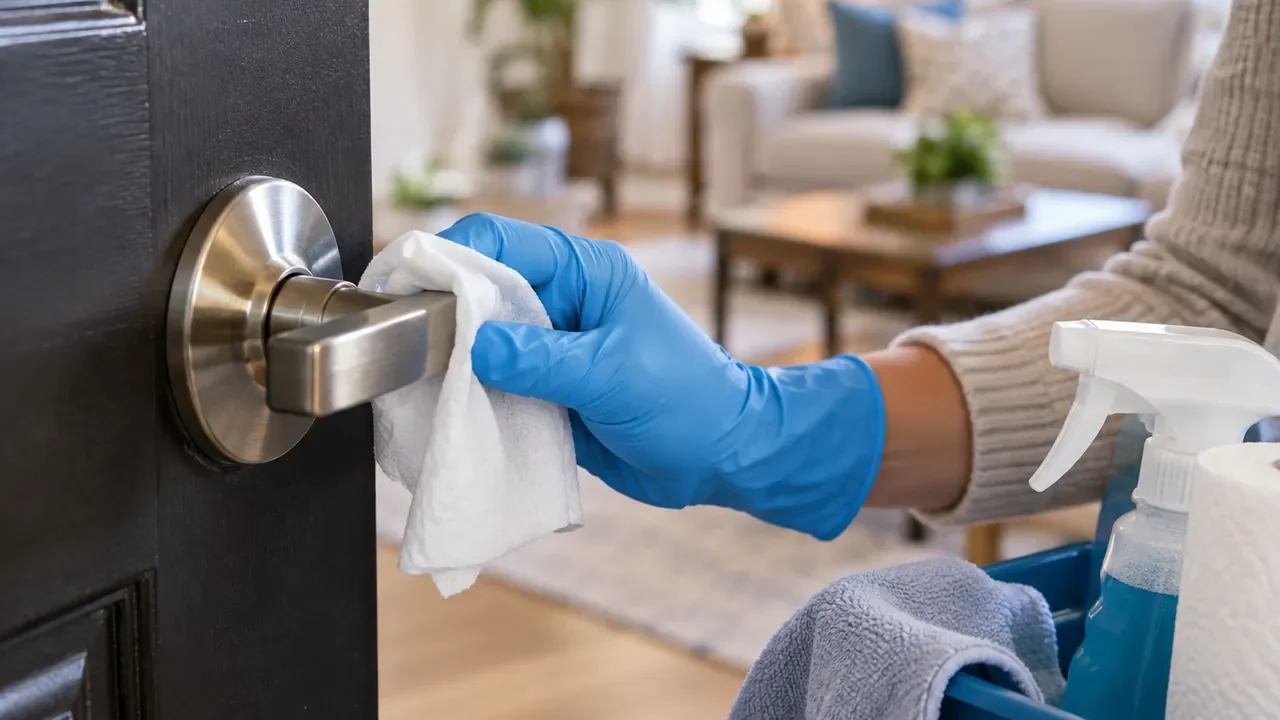
Bedroom, bathroom, closet, and hallway handles collect fingerprints and residue. Wipe both sides of the handle and the small area around it, then dry the surface if the finish requires it.
3. Refrigerator and freezer handles
Food preparation makes these handles especially easy to soil. Clean them when you wipe appliance fronts, paying attention to textured grips and the underside of pull handles where residue can build up.
4. Microwave controls
Buttons and touch panels can collect splatters and fingerprints. Let the appliance cool, follow the manufacturer guidance, and use a controlled amount of moisture so liquid does not run into seams.
5. Faucet handles
Kitchen and bathroom faucet handles are touched before and after handwashing, cooking, and cleaning. Wipe around the base as well as the handle itself, since water and product residue often collect in that edge.
6. Cabinet and drawer pulls
Kitchen pulls can accumulate grease while bathroom pulls may collect product residue. Include a few cabinets at a time in your weekly cleaning instead of waiting until every handle is visibly dirty.
7. Remote controls
Remotes are shared, handled while eating, and easily forgotten. Remove batteries if the manufacturer recommends it for cleaning, keep liquid away from openings, and use a method safe for the device finish.
8. Phone and tablet cases
Portable devices move between rooms and surfaces all day. Follow the device maker’s cleaning guidance and remember that the removable case may need a different method than the screen or electronics.
9. Computer mouse and keyboard
Work-from-home equipment can collect skin oils, crumbs, and dust. Power down or disconnect equipment before cleaning when appropriate, and avoid pushing moisture or debris deeper into openings.
10. Stair railings
Handrails are designed to be touched, so they deserve a regular wipe. Use a product suitable for painted wood, finished timber, metal, or other railing material and avoid leaving the surface slippery.
11. Appliance knobs
Range, oven, washer, and dryer controls are handled repeatedly. Make sure cooking appliances are cool before cleaning and avoid soaking removable knobs unless the manual specifically allows it.
12. Toilet flush handles or buttons
These small surfaces are easy to miss even during bathroom cleaning. Include them in the same pass as the toilet exterior and use a product compatible with the finish.
13. Trash can lids and handles
Bins are often touched while hands are busy. Wipe the lid, pedal, rim, and handle, and let the can dry before replacing the liner if the cleaning method leaves the surface damp.
14. Entry door hardware
Exterior and garage-entry handles get frequent use and can collect outdoor grime. Clean the interior and exterior sides with a finish-safe method and inspect screws or hardware while you are there.
15. Shared small appliances
Coffee makers, kettles, toaster levers, and other frequently used small appliances may have handles or controls that are rarely included in a cleaning routine. Unplug when appropriate and follow the appliance instructions before wiping them.
Quick checklist
- Add touch points to the end of a normal room-cleaning routine.
- Apply liquids to the cloth instead of spraying switches or electronics directly.
- Use separate cloths for bathroom and kitchen zones.
- Check manufacturer guidance for screens, specialty finishes, and appliances.
- Replace or wash cleaning cloths as they become soiled.
Common questions
How often should high-touch surfaces be cleaned?
Frequency depends on how many people use the home, whether anyone is ill, and how often the surface is handled. Many households can simply include them in a weekly routine and clean selected areas more often when needed.
Do all high-touch surfaces need disinfectant?
Not necessarily. Routine cleaning removes dirt and residue, while disinfecting is a separate step used when appropriate. Follow product labels and public-health guidance relevant to your situation, and make sure the product is suitable for the surface.
Bottom line
High-touch areas do not need a separate hour-long cleaning project. Attach them to the room routine you already have: handles while cleaning the kitchen, switches while dusting, and remotes while resetting the living room. Small, consistent attention keeps these easy-to-miss surfaces from becoming the dirtiest points in an otherwise clean space.