Laundry rooms combine water, electricity, heat, lint, detergents, and tight storage, which makes them worth a regular check even when they look clean. Most useful maintenance is simple: keep the area uncluttered, remove lint, watch for moisture, and follow appliance instructions.
If your washer or dryer is difficult to move, do not pull it out casually. Hoses, vents, cords, gas connections, and floor surfaces can be damaged when heavy appliances are shifted without a plan.
Empty the lint screen after drying
A clean lint screen supports airflow and reduces lint accumulation inside the dryer system. Follow the dryer manual for screen cleaning and never operate the machine without required filters in place.
Vacuum accessible lint around the machines
Lint and dust collect behind doors, along baseboards, and near the dryer. Vacuum accessible areas regularly without disturbing connections or opening service panels.
Inspect visible hoses and connections
Look for drips, bulges, cracks, corrosion, or hoses rubbing against sharp edges. Replace hoses according to the appliance or hose manufacturer guidance and use a qualified professional when connections are inaccessible or uncertain.
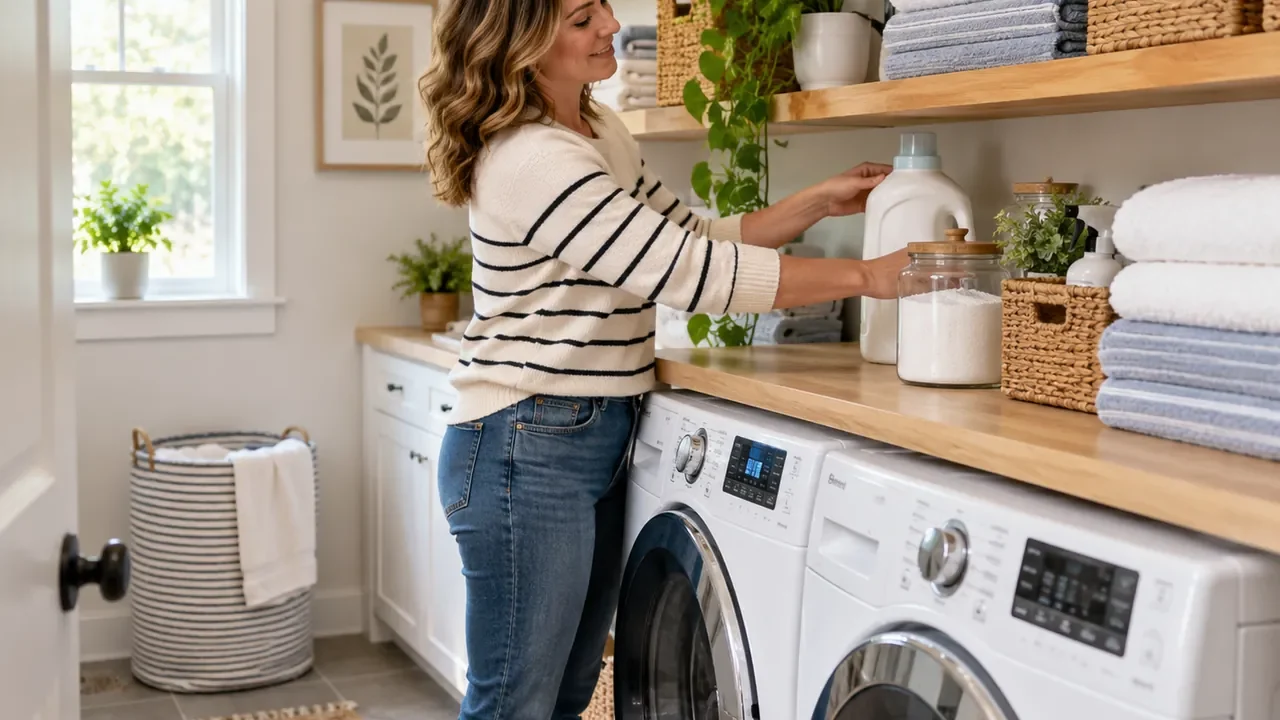
Keep detergent storage controlled
Store detergent, stain removers, and cleaning chemicals in their original labeled containers and out of reach of children or pets. Clean spills promptly because concentrated products can damage finishes and create slippery surfaces.
Keep the dryer vent path from being crushed
The visible connection behind the dryer should not be sharply kinked or crushed. If drying times increase, the exhaust path may need inspection and cleaning by an appropriate professional.
Give wet items room to dry
Do not leave damp cloths, mop heads, or towels piled in a closed basket for long periods. Hang or spread them so air can circulate, especially in a small laundry room with limited ventilation.
Protect the floor
Wipe water and detergent spills immediately and keep the walking area free of baskets. If the floor near the washer becomes repeatedly damp, investigate the source rather than assuming every puddle is a simple spill.
Do a quick monthly reset
Remove empty containers, return loose supplies to one shelf, vacuum lint, and inspect the visible floor edges around both appliances. A ten-minute reset makes changes easier to notice.
Quick checklist
- Clean the lint screen after dryer use.
- Vacuum accessible lint and dust monthly.
- Inspect visible water hoses and dryer connections.
- Keep chemicals labeled and securely stored.
- Investigate repeated moisture or longer drying times.
Common questions
How often should a dryer vent be cleaned?
The required interval depends on vent length, dryer use, lint production, and the system design. Follow manufacturer guidance and arrange inspection sooner if drying time increases, the dryer becomes unusually hot, or airflow seems reduced.
Should a washing machine door stay open?
Some manufacturers recommend leaving a door or lid ajar between uses to help the interior dry, while others have specific instructions. Follow the appliance manual and consider child and pet safety.
What to avoid
Avoid turning a simple cleaning or organizing session into a project that empties every cabinet at once. Work in finished zones, keep cleaning products in their original labeled containers, and do not mix chemicals. When a surface has special care requirements, use the manufacturer guidance instead of assuming a stronger product will work better.
Also avoid building an organizing system that takes more effort to maintain than the problem it solves. The best setup leaves frequently used items easy to return, keeps walking and working surfaces clear, and can survive a busy week without collapsing.
Bottom line
A laundry area stays easier to manage when lint, moisture, and supplies are controlled. Keep the floor clear, inspect visible connections, and respond to changes in drying time or water around the washer. Small monthly checks are much easier than dealing with a hidden leak or heavily clogged exhaust path later.