The kitchen sink is convenient, which is exactly why it is easy to treat the drain like a disposal route for almost anything liquid or soft. But many materials can cool, swell, clump, settle, or react in ways that are hard on household plumbing and local wastewater systems.
If your sink has a garbage disposal, that does not make every food scrap drain-safe. A disposal breaks food into smaller pieces; it does not make grease, fibrous waste, or sticky mixtures disappear.
1. Cooking grease and fat
Hot grease may look like a harmless liquid when it leaves the pan, but it can cool and cling to the inside of pipes. Over time, grease can combine with food particles and other debris to create stubborn buildup.
Let small amounts cool and solidify, then place them in the trash according to local waste rules. For larger quantities of used cooking oil, check whether your community has a recycling or collection option.
2. Coffee grounds
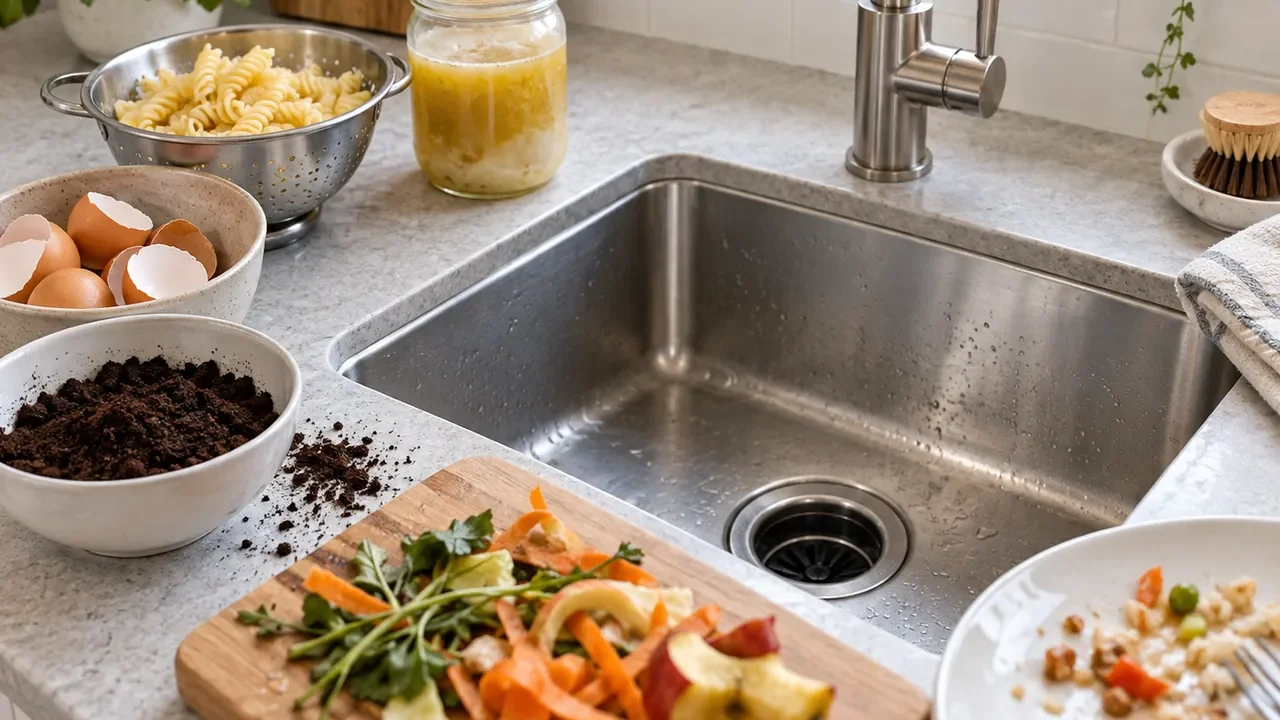
Coffee grounds do not dissolve in water. They can settle in low areas of plumbing and mix with grease or other residue. A sink strainer can catch loose grounds before they reach the drain.
Depending on your local waste setup, used grounds may be suitable for trash or compost. If you compost, make sure the rest of your composting system is appropriate for the material.
3. Flour and thick dough mixtures
Flour mixed with water becomes sticky. Large amounts of batter, dough residue, or flour slurry can cling to plumbing and trap other debris. Scrape bowls, pans, and work surfaces into the trash before rinsing them.
A thin film left after scraping is very different from pouring an unused bowl of batter into the sink.
4. Paint, stain, and solvents
Paint products and solvents do not belong in a kitchen drain. Disposal rules vary by product and location, and some materials require hazardous-waste handling. Keep the original label so you can follow the manufacturer’s disposal instructions and your local waste authority’s rules.
Do not assume that a product labeled water-based can simply be emptied into the sink. Local requirements still matter.
5. Strong household chemicals you are trying to get rid of
Unused cleaners, pesticides, automotive fluids, and other chemicals should not be disposed of through the kitchen sink simply because they are liquid. Mixing products in a drain can also create dangerous reactions.
Follow the disposal guidance on the product and check local household hazardous-waste options when needed. Never mix cleaners in an attempt to neutralize them.
6. Medication
Unused or expired medication should be handled through appropriate take-back or disposal guidance rather than casually flushed or poured into the sink. Pharmacy take-back programs and local collection events may be available.
Keep medication secure until it can be disposed of correctly, especially in homes with children or pets.
7. Large amounts of rice, pasta, and starchy food
Cooked rice and pasta can continue absorbing water and may become a sticky mass inside plumbing. Small accidental pieces are one thing; intentionally washing leftover servings down the drain is another.
Scrape plates and cookware before washing. A simple sink strainer catches a surprising amount of material.
8. Fibrous vegetable scraps
Celery strings, corn husks, artichoke leaves, onion skins, and similar fibrous scraps can wrap around disposal components or combine into clumps. Put larger fibrous scraps into the trash or an appropriate compost system.
9. Eggshells and other hard food scraps in quantity
Opinions about small food scraps vary by plumbing setup and disposal model, but there is little benefit to deliberately sending hard scraps down the drain. The safer everyday habit is to scrape dishes first and let the disposal handle incidental residue rather than using it as a trash can.
What should go down the kitchen sink?
For ordinary use, think mostly in terms of water and the small amount of compatible soap used for dishwashing, plus minor food residue left after dishes have been scraped. The less solid material you send into the plumbing, the less material there is available to collect in the drain line.
What if the sink is already draining slowly?
Do not keep pouring random chemical products into a slow drain. Start by checking the strainer and other accessible areas you can safely clean. If the problem continues, especially if multiple fixtures are affected or water backs up, a plumbing professional can identify the cause without guessing.
A kitchen drain is easiest to maintain when you treat it as plumbing rather than a waste chute. A few seconds of scraping and sorting at the sink can prevent a much larger cleanup later.