A small kitchen can work surprisingly well when storage follows the way the room is used. The biggest gains usually come from removing duplicate items, keeping daily tools close to their work zone, and protecting a few clear surfaces for preparation.
You do not need matching containers or a full remodel. Start by improving access and reducing unnecessary movement. The goal is a kitchen that is easy to cook in and easy to reset.
Clear the counters before adding storage
Move rarely used appliances, excess decor, unopened mail, and backup supplies away from the main preparation area. Counter space is working space, so protect it for tasks you do every day.
If an appliance is used only a few times a month, test storing it in a lower cabinet or pantry for two weeks. If you miss the convenience, move it back. The arrangement should reflect real use rather than a strict rule.
Create zones around the main tasks
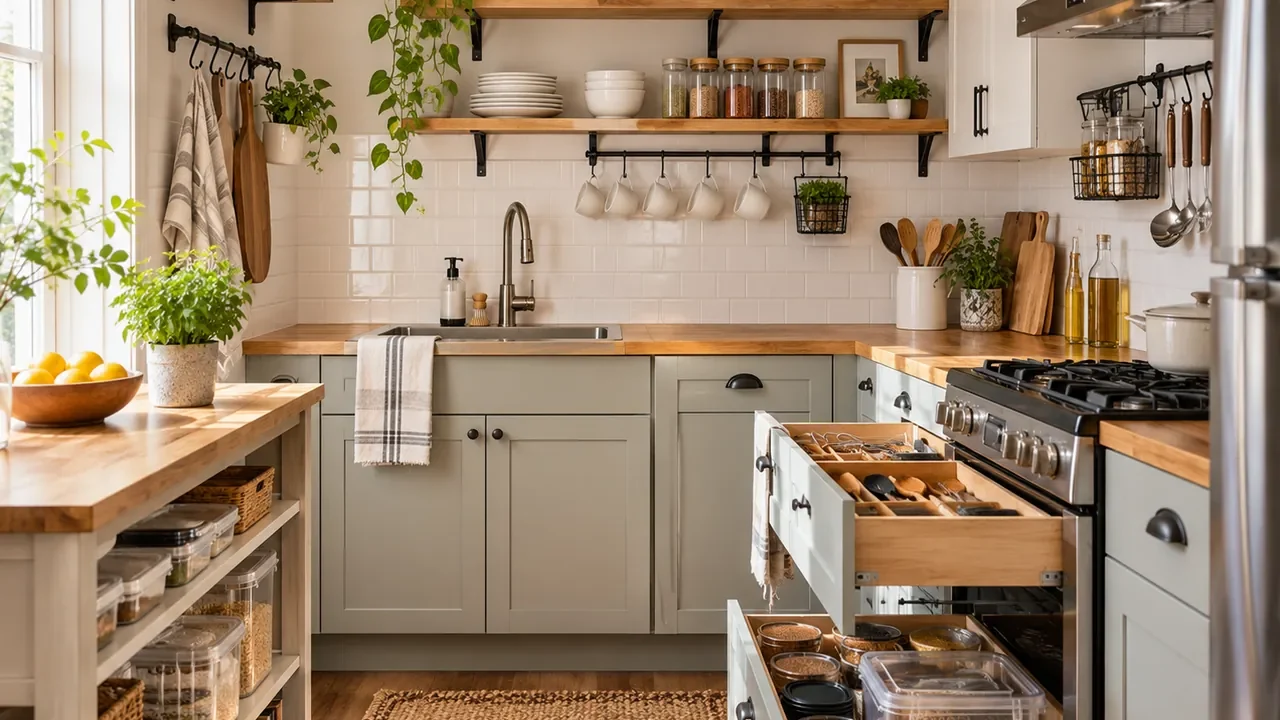
Group items by activity: coffee and tea near the kettle or coffee maker, cooking tools near the range, food-prep tools near the largest clear surface, and dishes near the dishwasher or drying area when possible.
Zones reduce cross-traffic and make it easier for another person to find things. They also reveal duplicates because similar items are finally stored together.
Use the best shelves for the most-used items
Prime storage is the area that is easy to reach without bending deeply or using a step stool. Put everyday plates, glasses, pans, and pantry staples there. Move holiday dishes, specialty appliances, and bulk backups to less convenient spaces.
This simple change can make a small kitchen feel larger because you are not constantly moving rarely used items out of the way.
Add vertical storage carefully
Shelf risers, stackable bins, hooks, and narrow racks can use otherwise wasted height. However, avoid creating unstable towers or blocking cabinet hinges and ventilation around appliances.
Measure before buying an organizer. A product that consumes too much width or depth may reduce usable space instead of increasing it.
Keep food visible enough to use
Group pantry items by type and put older products toward the front. In deep cabinets, a shallow bin can keep related packets together without hiding them behind each other.
Label only when it genuinely helps. Clear categories such as baking, breakfast, snacks, and canned goods are easier to maintain than a complicated system with dozens of tiny labels.
Simplify the container collection
Mismatched food-storage containers can consume an entire cabinet. Pair lids with containers, remove damaged pieces, and keep only a practical number of sizes you regularly use.
Nesting containers by shape and storing lids vertically can save space. Avoid overfilling the shelf; if everything must be removed to reach one item, the system will be difficult to maintain.
Protect a landing spot for groceries
Keep one section of counter or table clear enough to place grocery bags while unloading. This prevents food from being scattered across chairs, floors, and the stovetop.
Unpack by zone: refrigerator items together, freezer items together, and pantry items together. Returning categories to their homes is faster when the storage is already organized around use.
Build a five-minute nightly reset
Load or empty the dishwasher as needed, clear the sink, wipe the main counter, and return stray items to their zones. This small reset is what keeps a compact kitchen from feeling overwhelmed the next morning.
Do not turn the reset into a deep-clean routine. The objective is to restore working space so the kitchen starts the next day ready for use.
Quick checklist
- Keep the main prep counter as clear as possible.
- Store daily-use items in the easiest-to-reach cabinets.
- Group tools and supplies by task rather than by size alone.
- Measure cabinets before buying racks or bins.
- Reset the sink and main counter each evening.
Common questions
Should small kitchens use open shelving?
Open shelves can make frequently used dishes easy to reach, but they also expose items to dust and visual clutter. Use them only if the displayed items are used and cleaned often and the shelf location is suitable.
How many appliances should stay on the counter?
There is no fixed number. Keep appliances out if they are used often enough to justify the space. Store occasional-use appliances if doing so does not make them so inconvenient that you stop using them.
Bottom line
A small kitchen becomes easier to use when storage supports the order of real tasks. Clear the main work surfaces, group items into practical zones, and give the most accessible shelves to the things you reach for most. A simple five-minute reset will preserve those improvements far better than a complicated organizing system.