A small entryway has to do a lot of work in very little space. It may need to hold shoes, keys, bags, coats, mail, pet gear, umbrellas, and deliveries while still leaving a clear path through the door. The solution is rarely adding more storage. It is deciding what truly needs to live near the entrance.
Begin by emptying the landing zone
Take everything off the floor, console, hooks, and nearby chair. Sort it into four groups: items used every time you leave, seasonal items, things that belong elsewhere, and trash or recycling. This first pass shows how much of the clutter is actually entryway-related.
Keep only the current season near the door
A small entry cannot comfortably hold winter boots, beach bags, rain gear, sports equipment, and every jacket at the same time. Move off-season items to another storage area. Rotating them a few times a year is easier than living with permanent overflow.
Create one small drop zone for keys and daily essentials
Use a tray, shallow bowl, or wall-mounted organizer for the few items you need when leaving. Keep it intentionally small. A large catch-all basket often becomes a place for receipts, loose change, mail, and objects nobody wants to sort.
Use the wall before using more floor
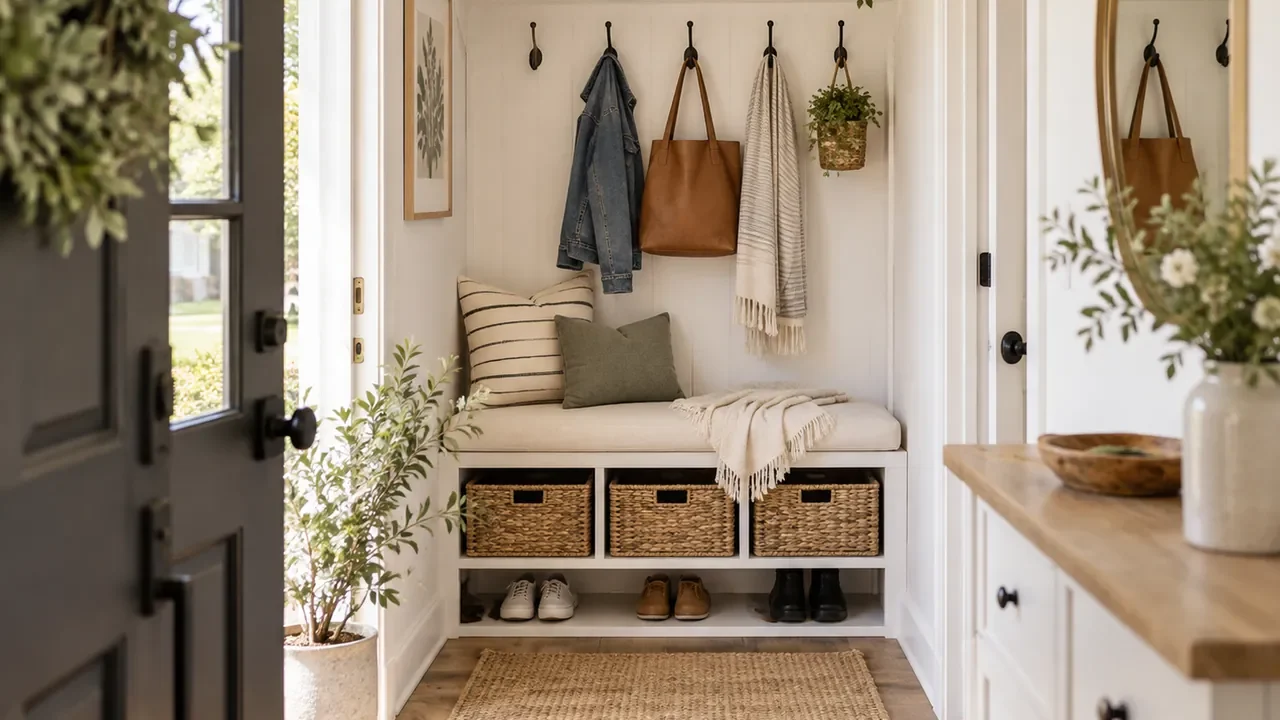
Hooks can be more space-efficient than a freestanding coat rack, especially in a narrow entry. Install them securely for the expected weight and at heights that work for the people using them. A slim wall shelf can hold lightweight items without blocking the walking path.
Set a realistic shoe limit
Decide how many pairs each person can keep by the door. The rest belong in a closet or bedroom. A low shoe rack, shallow cabinet, or simple tray can define the limit visually. If the rack holds eight pairs, the ninth pair should not start a new floor pile.
Hide the unattractive small stuff
Dog leashes, hats, gloves, reusable bags, shoe-care items, and umbrellas can create visual noise. Use one or two labeled baskets or drawers rather than many tiny containers. Closed storage is particularly useful when the entry opens directly into a living room.
Choose furniture by depth, not just width
A console table can fit the wall and still make the entry feel cramped if it projects too far into the walkway. Measure the open path with the door fully operating before buying furniture. Slim shelves, wall-mounted ledges, or a shallow cabinet may work better than a standard table.
Give incoming paper a destination
Mail is one of the fastest ways to overwhelm a small surface. Decide what happens to it the moment it enters: recycle obvious junk, place action items in a small folder or tray, and move documents that need filing away from the entry.
Use a mirror carefully
A mirror can make a small entry feel brighter and is useful for a quick check before leaving. Mount it securely and position it where it does not create a collision risk with the door, hooks, or a busy walkway.
Leave some empty space on purpose
Every inch does not need to be filled with storage. A clear section of wall and a visible patch of floor make the entry feel calmer and leave room for temporary items such as a grocery bag or package.
Protect the door swing and the walking path
Storage should never make the entrance harder to use. Open the door fully and walk the normal route while carrying a bag or package. Make sure baskets, benches, shoes, and umbrella stands do not narrow the path or create a trip point. If the entry is also an emergency exit, avoid solutions that depend on moving objects before the door can be used.
This check is especially important in very narrow halls, where a piece of furniture can look slim in a product photo but still project too far into the real walking space.
Create a two-minute evening reset
At the end of the day, return shoes to their limit, hang bags, move mail, and put stray items into the rooms where they belong. The reset works because the storage rules are already decided; you are not reorganizing the space every night.
A small entryway needs boundaries more than containers
The most effective organization systems answer simple questions: How many coats stay here? How many shoes? Where do keys go? Where does mail go? What leaves the entry at the end of the day?
Once those boundaries are clear, you can add only the hooks, baskets, and furniture needed to support them. That keeps the space functional without turning the entrance into a wall of storage.