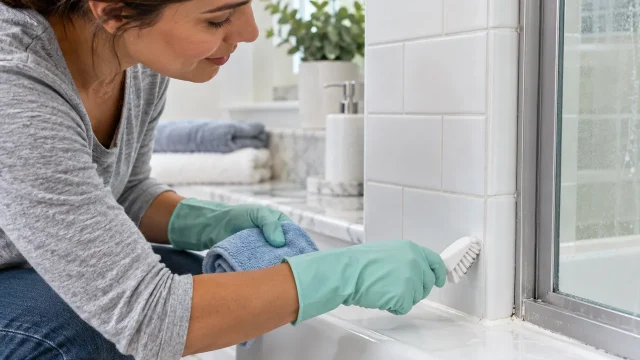
Bathrooms create a lot of moisture in a small space. When that moisture stays on walls, ceilings, caulk, towels, and grout for too long, the room can develop musty odors and visible surface growth. The most effective routine is usually not a stronger fragrance or more cleaner. It is getting the room dry faster.
Start with ventilation during the shower
If the bathroom has an exhaust fan that vents as intended, run it during showers and for a period afterward. Keep the door or other ventilation path appropriate for your home so replacement air can enter. A fan cannot move air effectively if the grille is packed with dust or the airflow path is blocked.
If the room has no exhaust fan, use the ventilation options available to you safely, such as opening a window when weather and security allow. Persistent moisture problems may justify having a suitable ventilation solution evaluated.
Keep the fan grille clean
Dust on the fan cover restricts airflow and gives the bathroom a neglected appearance. Turn the fan off before cleaning the accessible exterior grille. Follow the manufacturer’s instructions before removing covers or cleaning internal parts.
If the fan is unusually noisy, does not run consistently, or seems to move very little air even after basic cleaning, it may need service rather than more surface cleaning.
Remove standing water after showers
A small squeegee can remove a surprising amount of water from shower glass and smooth wall surfaces. Wiping the top edges and ledges where water collects also helps. You do not need to dry every tile perfectly; the goal is to reduce the amount of water that must evaporate into the room.
Hang towels so they can actually dry
A wet towel folded over itself on a narrow hook dries slowly. Spread towels across a bar or use enough hooks that fabric is not bunched tightly. Wash towels on a schedule that fits how often they are used and allow them to dry fully between uses.
Bath mats also need drying time. If the underside stays wet for long periods, rotate or hang the mat when practical.
Do not hide wet items inside closed storage
Wet cleaning cloths, bath toys, sponges, and shower accessories should not be placed into a sealed bin or dark cabinet while damp. Drain and air-dry them first. A container with drainage or open ventilation is often easier to keep fresh than a completely sealed basket used for wet items.
Clean soap residue before it becomes a heavy layer
Soap residue and body oils can make shower surfaces look dull and can hold grime. A light weekly cleaning is usually easier than waiting for a thick layer to develop. Choose a cleaner compatible with the specific surface, especially if you have natural stone, specialty coatings, or delicate metal finishes.
Watch the caulk and grout lines
Caulk is not permanent. If it has separated from the surface, cracked, or failed around a wet area, simply scrubbing it may not solve the problem. The joint may need to dry and be properly re-sealed with an appropriate product.
Grout discoloration can have several causes. Clean it with a compatible method rather than repeatedly using stronger chemicals. If a wall or floor feels soft, loose, or persistently damp, investigate the underlying moisture source.
Keep the toilet and sink areas dry too
Bathroom moisture does not only come from showers. Small splashes around the sink, condensation, and minor toilet leaks can keep surfaces damp. Wipe recurring water and look for the source if the same spot stays wet.
Use fragrance as the finishing touch, not the solution
Air fresheners can change how a bathroom smells, but they do not remove moisture or dirt. A room that dries quickly and has clean textiles usually needs much less fragrance to feel fresh.
When visible mold keeps returning
A small surface spot that repeatedly comes back may indicate that the area stays damp or that moisture is entering from somewhere you cannot see. Large areas, hidden water damage, recurring leaks, or growth associated with damaged building materials deserve professional evaluation rather than repeated cosmetic cleaning.
A simple bathroom routine
After showers, run ventilation, remove obvious standing water, and hang wet textiles to dry. Once a week, clean the sink, toilet, shower touch points, and visible residue. Once a month, inspect caulk, the fan grille, storage areas, and the floor edges for changes.
The result is a bathroom that feels fresher because moisture spends less time sitting on the surfaces that are hardest to maintain.