Decluttering often goes wrong before it begins: everything gets pulled out at once, the room becomes unusable, and decision fatigue arrives long before the project is finished. A better approach is to keep most of the room intact while you improve one clearly defined zone at a time.
This method works especially well for bedrooms, living rooms, home offices, and multipurpose spaces because you can stop after any completed section and still have a functional room.
Define what “done” means for this room
Before touching anything, decide what the room needs to do. A bedroom may need clear walking space and easy clothing storage. A home office may need an empty work surface and accessible paperwork. This purpose becomes the filter for what deserves space.
Write down two or three outcomes. Avoid vague goals such as “make it perfect.” A specific target makes it easier to know when you can stop.
Choose one small zone
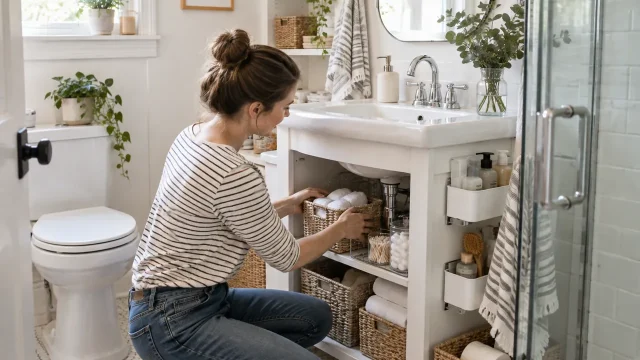
Start with a drawer, one shelf, the top of a dresser, or a two-foot section of floor. Finish that zone completely before expanding. This prevents the common problem of spreading objects across the whole room without making a final decision.
If the room is heavily cluttered, begin near the doorway or another area that will improve access. A visible early win can make the rest of the job feel more manageable.
Use only four temporary categories
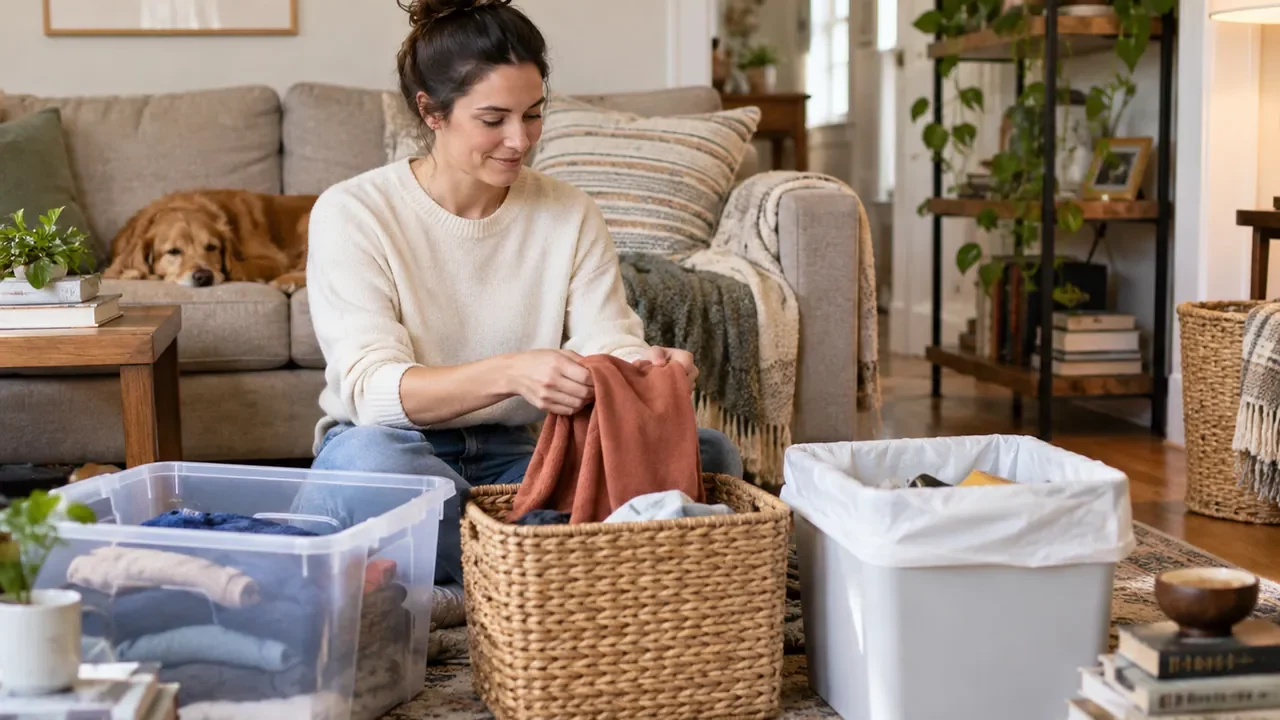
Create simple groups: keep here, move elsewhere, donate or sell, and trash or recycle. Too many categories slow decisions. Use bags or small boxes that are easy to remove when the session ends.
Do not create a large “decide later” pile. If an item truly needs research, place it in one small review box with a limit. When the box is full, something must be decided before another item is added.
Remove obvious trash first
Packaging, expired papers, broken items you do not plan to repair, and obvious rubbish are low-effort decisions. Clearing them creates working space before you face sentimental or expensive items.
Handle personal records and anything containing private information appropriately rather than throwing them into an unsecured bin.
Ask whether the item supports the room
For objects you are unsure about, ask where you use them, how often, and whether another item already serves the same purpose. If it belongs in another room, place it directly in the move-elsewhere container instead of walking away from the current zone every few minutes.
Avoid keeping items only because storage space happens to exist. Storage is most useful when it protects and organizes things you actively want to keep.
Give kept items a realistic home
Place frequently used items between knee and shoulder height when possible. Seasonal or rarely used items can go higher, lower, or farther back. Avoid creating complicated systems that require several steps for something you use every day.
Containers should solve a specific storage problem. Measure the shelf or drawer before buying organizers and use existing boxes first while you test the layout.
Finish the exit step immediately
Take trash out, move donation bags to the car or pickup area, and return relocate items to their proper rooms. Leaving bags in a corner turns decluttering into a new form of clutter.
If you plan to sell items, set a deadline. If they are not listed or sold by that date, decide whether donating them would free the space faster.
Stop while the room is still functional
A completed shelf is better than a half-finished room. End the session by putting tools away, wiping the newly cleared surface, and taking a quick photo if progress motivates you.
Plan the next zone before you stop so the following session has an obvious starting point.
Quick checklist
- Define the room’s purpose before sorting.
- Work one shelf, drawer, or surface at a time.
- Keep temporary sorting categories simple.
- Remove donation and trash bags at the end of each session.
- Buy organizers only after you know exactly what needs to be stored.
Common questions
What if I struggle to let go of useful items?
Useful is not the same as useful to you. Consider whether the item has been used recently, whether you already own a substitute, and whether storing it makes the room harder to use. You can also set a small limit for backup items.
Should I organize first or declutter first?
Declutter first. Organizing items you no longer want adds work and may lead you to buy storage for things that will eventually leave the home anyway.
Bottom line
Decluttering works best when the room never becomes more chaotic than you can recover from in one session. Keep the project small, make decisions within a clear purpose, and finish the exit step every time. A series of completed zones will improve the room faster than one dramatic pile that takes days to resolve.