A home can look freshly cleaned and still feel dusty, streaky, or stale a few hours later. Often the problem is not a lack of effort. It is the order of the work, the amount of product being used, or a few habits that quietly move dirt from one surface to another.
1. Cleaning the floor before the higher surfaces
If you vacuum or mop first and then dust shelves, ceiling fans, blinds, and countertops, some of that debris will fall onto the floor you just finished. A more efficient order is top to bottom: higher surfaces first, work surfaces next, and floors last.
You do not need to clean every ceiling fixture every time. The point is to avoid doing the same work twice.
2. Using too much cleaning product
More cleaner does not automatically mean more cleaning power. Excess product can leave a film that attracts dust, makes floors feel tacky, or causes glass and stainless steel to streak. Follow the product label, especially for concentrates.
When you are unsure whether residue is the problem, try wiping a small area with a clean damp microfiber cloth and then drying it. If the surface suddenly looks better, buildup may be part of the issue.
3. Spraying cleaner directly onto electronics and delicate surfaces
Direct spraying can send moisture into seams, controls, speaker openings, or edges where it does not belong. For many compatible surfaces, applying a small amount of the appropriate cleaner to the cloth gives you more control. Always follow the manufacturer guidance for screens, electronics, stone, wood, and specialty finishes.
4. Using the same cloth everywhere
A cloth that cleaned the bathroom sink should not immediately move to a kitchen counter. Even within one room, an overloaded cloth may simply redistribute grease and dust. Use separate cloths for different zones and switch to a clean side as the fabric becomes soiled.
Color-coding cloths is a simple way to keep bathroom, kitchen, glass, and general-dusting cloths separate.
5. Forgetting to clean the cleaning tools
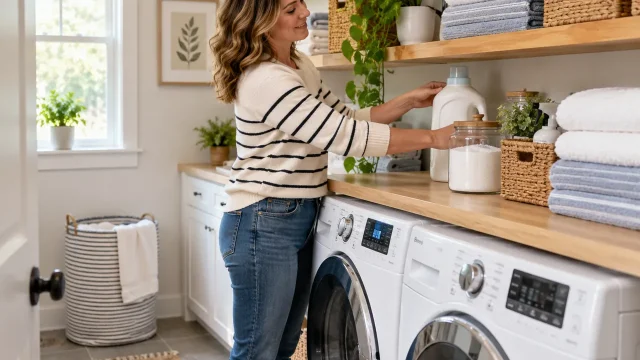
Vacuum filters, mop heads, reusable cloths, brushes, squeegees, and buckets all collect the material you remove from the home. If they stay dirty, the next cleaning session starts with contaminated tools. Empty vacuum bins, maintain filters as directed, wash reusable textiles, and let wet tools dry completely before storing them.
6. Wiping dust with a dry feather duster and stopping there
Some dusters are useful for hard-to-reach areas, but quickly flicking dust around the room can leave much of it airborne. A slightly damp microfiber cloth or a tool designed to capture particles is often more controlled on flat surfaces. Work slowly rather than aggressively shaking dust into the air.
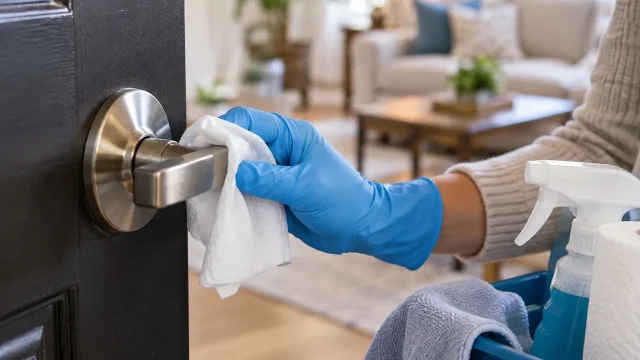
7. Ignoring touch points
Door handles, cabinet pulls, light switches, remote controls, refrigerator handles, and appliance buttons are easy to overlook because they are small. Yet they are touched constantly. Add them to a regular cleaning route rather than waiting until they visibly look dirty.
Use products that are compatible with the surface and electronics involved, and avoid saturating switches or controls.
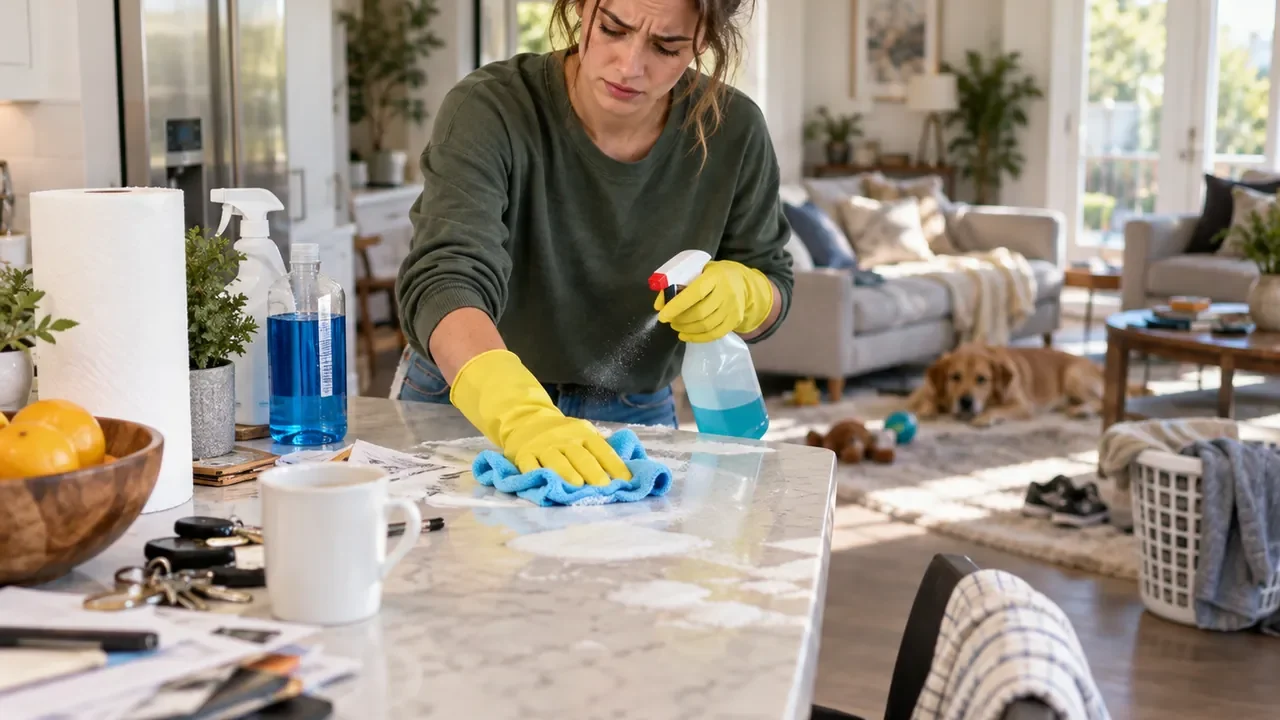
8. Cleaning around clutter instead of resetting the space
Wiping around a pile of papers or a crowded bathroom counter creates the appearance of cleaning without making the room easier to maintain. Before cleaning a surface, remove the items, discard obvious trash, return things that have a home, and group the rest into a small temporary basket.
This is not the same as doing a full organizing project. It is simply giving yourself enough open surface to clean properly.
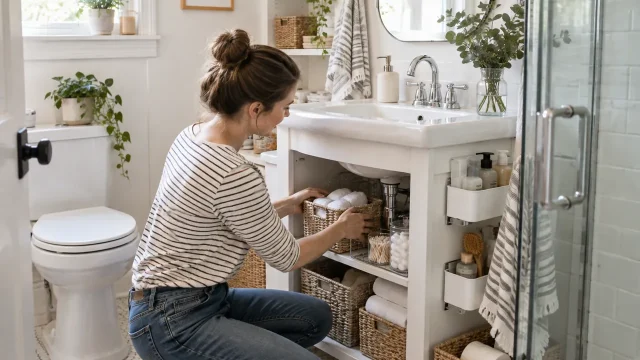
9. Closing up wet bathrooms and cleaning tools too quickly
Moisture needs time to leave. After a shower or wet cleaning session, ventilation and drying matter. Hang towels and cloths so air can reach them, spread out a damp mop head, and avoid sealing wet tools inside a dark cabinet.
In bathrooms, use the exhaust fan if available and practical, and keep the shower area as dry as reasonably possible after use.
10. Trying to deep-clean the whole house in one exhausting session
When every room is saved for one giant cleaning day, attention usually drops near the end. Small mistakes become more likely, tools get dirtier, and important areas are skipped. A short rotating schedule is easier to repeat and often keeps the home looking more consistently clean.
A better cleaning order
For most rooms, a simple sequence works well: remove obvious clutter, gather supplies, dust from higher areas downward, clean touch points and work surfaces, clean glass or mirrors, then vacuum or mop last. Kitchens and bathrooms may need their own product-specific steps, but the same principle applies: avoid moving dirt back onto an area you already finished.
The goal is less rework, not more work
Good cleaning routines are designed to reduce repeated effort. Use clean tools, reasonable amounts of product, a consistent direction through the room, and enough drying time. When a surface has special care requirements, its manufacturer instructions should take priority over generic cleaning advice.
Once these habits become automatic, the same amount of cleaning time usually produces a home that looks and feels fresher for longer.