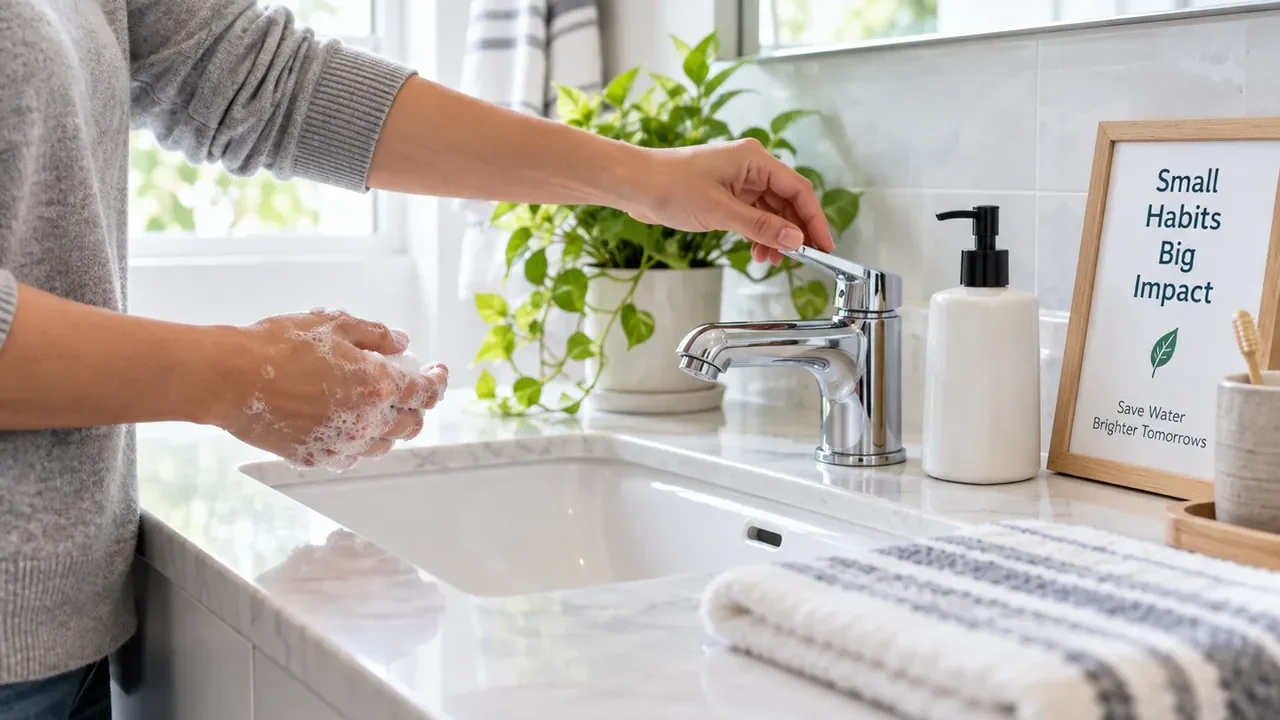
Saving water does not require turning every daily task into a calculation. The easiest reductions come from fixing waste, using appliances efficiently, and changing a few habits that do not affect comfort very much.
Start with the areas that use water most often in your home. Local utility guidance and restrictions should take priority, especially in drought-prone regions.
1. Fix visible drips
A dripping faucet or running toilet can waste water continuously. Repair simple fixture problems if you are comfortable doing so, or arrange a plumber when the source is unclear or the repair is beyond your skill level.
2. Do not let the tap run while you are not using the water
Turn water off during tasks such as brushing teeth or scrubbing dishes when a continuous stream is not needed. This is a habit change with no equipment cost.
3. Run full dishwasher loads
Use the dishwasher when it has a practical full load rather than running it for a few items, unless the appliance guidance says otherwise. Choose efficient cycles appropriate for the soil level.
4. Match laundry settings to the load
Use load-sensing or appropriate water-level settings if the washer provides them. Avoid repeatedly washing very small loads unless necessary for fabric care or household needs.
5. Keep drinking water cold without running the tap
If you prefer cold water, keeping a covered pitcher in the refrigerator can reduce the need to run the faucet while waiting for the temperature to drop.
6. Wash produce in a bowl when practical
For some fruits and vegetables, using a clean bowl of water rather than a continuously running stream can reduce use. Follow food-safety guidance and use fresh water when needed.
7. Check toilets for silent leaks
A toilet may leak internally without water appearing on the floor. Listen for repeated refilling and use a test method recommended by your local utility or the fixture manufacturer if you suspect a leak.
8. Use a bucket when waiting for water temperature
Where practical and safe, collect clean water that would otherwise go down the drain while waiting for hot water and use it for suitable household tasks or plants that can use it.
9. Sweep outdoor hard surfaces first
Use a broom or blower where appropriate to remove dry debris from patios and paths instead of relying on a hose for routine cleanup. Follow local dust and noise rules.
10. Water plants according to need
Check soil and local guidance before watering. Group plants with similar water needs and avoid watering hard surfaces because of poorly aimed irrigation.
11. Inspect irrigation for leaks
Broken heads, loose fittings, and misdirected spray can waste water quickly. Observe the system while it runs and repair problems using compatible parts or a qualified irrigation professional.
12. Choose efficient fixtures when replacement is already needed
When a showerhead, faucet, toilet, or appliance reaches replacement time, compare water-efficiency information along with performance and compatibility. Replacing working equipment solely for savings may not always make financial sense, but planned replacements are an opportunity to improve efficiency.
Quick checklist
- Repair leaks before focusing on smaller behavior changes.
- Run dishwashers and washers with efficient loads.
- Turn off water when a continuous stream is not needed.
- Observe irrigation while it is operating.
- Follow local drought rules and utility guidance.
- Consider efficiency when fixtures or appliances are already due for replacement.
Common questions
Which household leak wastes the most water?
The amount varies by the size and type of leak. A running toilet or continuously flowing fixture can be significant because it operates for long periods. Fix any persistent leak rather than trying to rank it.
Is handwashing dishes always more efficient than a dishwasher?
Not necessarily. Water use depends on the dishwasher model, cycle, load, and handwashing method. A modern efficient dishwasher used with full loads can be very efficient, so compare the appliance information and your habits.
Measure savings against convenience and safety
Efficiency habits are most useful when they are easy to repeat and do not interfere with safety, food storage, ventilation, equipment instructions, or reasonable comfort. Focus first on obvious waste such as leaks, unnecessary runtime, poor maintenance, and items that stay powered or running without a purpose.
When replacing equipment, compare total cost, expected use, warranty, and efficiency rather than buying a new product only because it promises savings. Keeping a working appliance maintained can sometimes be more practical than replacing it early.
Bottom line
Water savings are easiest to maintain when they remove waste rather than comfort. Fix leaks, use appliances efficiently, stop unnecessary running water, and make sure outdoor systems are putting water where it is actually needed. Those habits are simple enough to keep long after the first month.