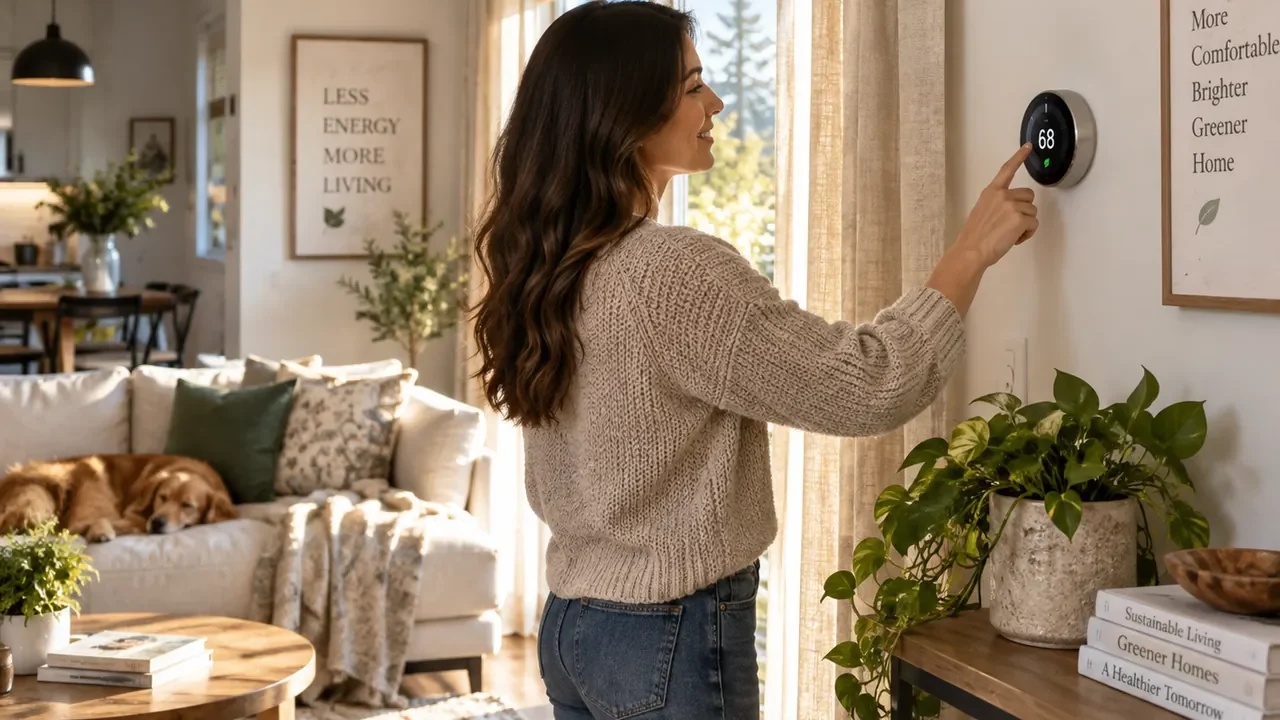
Heating and cooling often represent a large share of household energy use, but efficiency improvements do not have to start with expensive equipment. Many homes can reduce waste by improving controls, maintaining airflow, and preventing conditioned air from escaping unnecessarily.
Comfort and safety still come first. Temperature settings should suit the people in the home, local climate, humidity conditions, and any health needs.
Use a thermostat schedule you can actually live with
Large uncomfortable setbacks may lead people to override the thermostat constantly. A modest schedule matched to sleep, work, and away times is easier to maintain. Follow the equipment guidance, especially for heat pumps or systems with special control strategies.
Check the HVAC filter regularly
A heavily loaded filter can restrict airflow. Inspect it on a routine schedule and replace or clean it according to the filter and equipment instructions. Renovation dust and pets may require more frequent checks.
Keep supply and return vents clear
Furniture, rugs, curtains, and storage can block airflow. Walk through the home and make sure intended vents and returns are open and unobstructed unless the system design specifically calls for another arrangement.
Seal obvious drafts
Worn weather stripping and failed caulk around exterior openings can allow unwanted air movement. Repair simple gaps with products suited to the location, but do not block designed drainage or ventilation openings.
Use window coverings strategically
Close blinds or curtains to reduce unwanted solar heat during hot periods when appropriate, and use useful winter sun when it helps warm a space. The best strategy depends on window orientation and climate.
Use ceiling fans for comfort, not empty rooms
Fans cool people by moving air; they do not lower room temperature in the same way an air conditioner does. Turn them off in empty rooms unless a specific ventilation purpose requires them.
Manage humidity
High humidity can make warm weather feel hotter, while very dry winter air can feel uncomfortable. Use ventilation, dehumidification, or humidification only as appropriate for the climate and building, and avoid moisture levels that encourage condensation.
Maintain the outdoor unit area
Keep leaves, debris, and vegetation from crowding accessible outdoor HVAC equipment, following manufacturer clearance guidance. Do not open electrical compartments or perform service beyond routine homeowner maintenance.
Pay attention to rooms that are consistently different
A room that is always much hotter or colder can have insulation, air sealing, duct, window, exposure, or airflow issues. Repeatedly forcing the whole system to compensate may waste energy. A professional assessment can identify the cause.
Service equipment when performance changes
Unusual noises, frequent cycling, icing, persistent comfort problems, or rapidly increasing energy use can indicate a system issue. Timely service can prevent a small maintenance problem from becoming a larger one.
Quick checklist
- Use a realistic thermostat schedule.
- Inspect filters and keep airflow paths open.
- Repair simple unintended drafts.
- Use shade and fans strategically.
- Keep outdoor equipment clear according to the manufacturer.
- Investigate rooms with persistent comfort problems.
Common questions
Does closing vents in unused rooms save energy?
Not always. Many forced-air systems are designed for a particular airflow balance, and closing too many vents can create pressure or comfort problems. Follow the system guidance or ask an HVAC professional before making large changes.
What thermostat temperature saves the most money?
There is no single setting for every home. Savings depend on climate, equipment, building efficiency, schedule, and comfort needs. A reasonable setpoint that you can maintain consistently is usually more practical than an extreme target.
Measure savings against convenience and safety
Efficiency habits are most useful when they are easy to repeat and do not interfere with safety, food storage, ventilation, equipment instructions, or reasonable comfort. Focus first on obvious waste such as leaks, unnecessary runtime, poor maintenance, and items that stay powered or running without a purpose.
When replacing equipment, compare total cost, expected use, warranty, and efficiency rather than buying a new product only because it promises savings. Keeping a working appliance maintained can sometimes be more practical than replacing it early.
Bottom line
Reducing heating and cooling waste starts with simple system basics: sensible controls, clean filters, open airflow paths, managed drafts, and regular maintenance. After those are in place, persistent hot or cold rooms deserve their own diagnosis instead of asking the entire house to compensate.