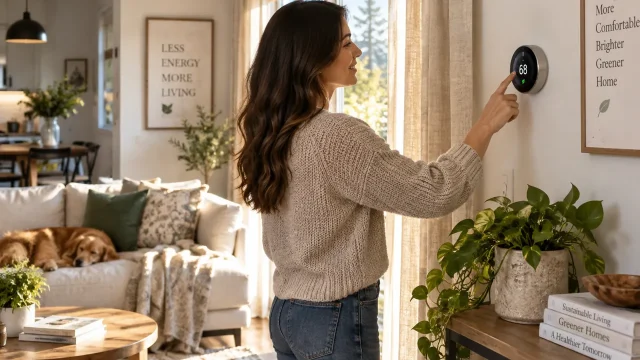
Lowering household energy use does not have to begin with a major renovation. The easiest savings often come from reducing waste: conditioning an empty room, heating more water than you need, running half-full appliances, or leaving old habits in place long after your routine has changed.
The exact savings from any step depend on your climate, utility rates, equipment, and household. Treat the ideas below as a checklist for finding waste rather than a promise of a specific bill reduction.
1. Adjust heating and cooling when the house is empty
If your HVAC system and household allow it, avoid maintaining the exact same comfort setting when nobody is home for long periods. A programmable or smart thermostat can make schedule changes easier, but even a consistent manual routine can help.
Do not use extreme temperature changes that create comfort, humidity, pipe-freezing, pet, or equipment problems.
2. Keep filters and airflow paths maintained
A dirty HVAC filter or blocked return grille can make the system work under poorer airflow conditions. Check filters regularly and replace or clean them according to the equipment instructions and actual dust load in your home.
3. Close obvious air leaks you can address safely
Worn weather stripping around doors and windows can allow unwanted outside air into conditioned rooms. Replace damaged seals with compatible materials and make sure doors still latch and operate safely. Larger building-envelope problems may need a professional assessment.
4. Use curtains and shades strategically
Window coverings can help manage direct sunlight and comfort. In hot weather, closing coverings on strong sun exposures can reduce heat gain. In cooler periods, useful sun can sometimes help warm a room, provided you close coverings when outdoor temperatures drop and drafts are an issue.
5. Switch off lights in unused rooms
This habit sounds obvious because it is. The best energy-saving routines are often simple enough to repeat every day. If a room regularly has lights left on, consider whether the switch location, household habit, or fixture setup is contributing to the problem.
6. Replace failed bulbs with efficient compatible options
When a bulb needs replacement, choose an efficient type that is suitable for the fixture, dimmer, enclosure, and location. Match light output to the task rather than buying the highest brightness available.
7. Wash full loads when practical
Dishwashers and washing machines are generally more efficient per item when used with reasonably full loads rather than many small cycles. Do not overload equipment; follow the appliance instructions so water and air can circulate as intended.
8. Use cooler laundry settings when appropriate
Many everyday fabrics can be washed at lower water temperatures when their care labels and soil level allow it. Reserve hotter settings for loads that actually need them rather than using maximum heat by default.
9. Air-dry selected items
A drying rack is useful for delicate clothes, small loads, or items that dry quickly. It also reduces dryer wear on some fabrics. Make sure indoor drying does not create a humidity problem in your climate or home.
10. Keep the dryer working efficiently
Clean the lint screen after use and keep the exhaust system maintained. If clothes take much longer to dry than they used to, investigate the cause rather than simply running longer cycles.
11. Avoid heating more water than you need
Shorter showers, repairing dripping hot-water faucets, and running full dishwasher loads can reduce unnecessary hot-water use. Water-heater temperature settings involve safety and equipment considerations, so follow manufacturer and qualified professional guidance rather than changing settings blindly.
12. Use appliance eco modes when they suit the load
Many newer dishwashers, washing machines, and other appliances include efficiency-focused modes. These cycles may take longer because they trade time for lower resource use. Use them when the load and manufacturer instructions make them appropriate.
13. Reduce standby power where it is convenient
Some electronics use power while idle. Smart power strips or simply unplugging rarely used accessories can help in areas with many chargers and entertainment devices. Do not interrupt power to equipment that needs continuous operation, updates, alarms, or safe shutdown procedures.
14. Maintain refrigerator airflow and door seals
Keep ventilation areas around the refrigerator clear according to the appliance manual. Clean accessible coils if the manufacturer recommends it and inspect door gaskets for dirt or obvious damage. Avoid leaving the door open while deciding what to eat.
15. Track the changes that actually matter in your home
Utility bills vary with weather and household activity, so a single month can be misleading. If your utility provides daily or hourly usage data, use it to compare routines over time. That feedback can show whether a change is meaningful enough to keep.
Start with the habits you can repeat
Choose three changes that fit your normal routine instead of trying all fifteen in one weekend. For example: keep filters checked, run full laundry loads, and adjust the thermostat when the house is empty. Once those are automatic, add another.
Energy efficiency works best when it improves the home without making daily life unnecessarily difficult. Focus on removing waste first, then consider larger upgrades when equipment reaches the end of its useful life or when a professional assessment shows a clear opportunity.